The factory says the order is finished. The forwarder has reserved space, and the balance payment is approaching. This is exactly when a rushed inspection can become little more than a carton photo session. A useful pre-shipment inspection needs accessible goods, an agreed sample plan and a product file that tells the inspector what counts as wrong.
The inspection does not approve the order on the buyer’s behalf. It supplies evidence for that decision. The buyer may release the shipment, ask for sorting, require repair, arrange a second visit or hold the goods. Set those possible outcomes before inspection day.
Book the inspection when the order is genuinely ready
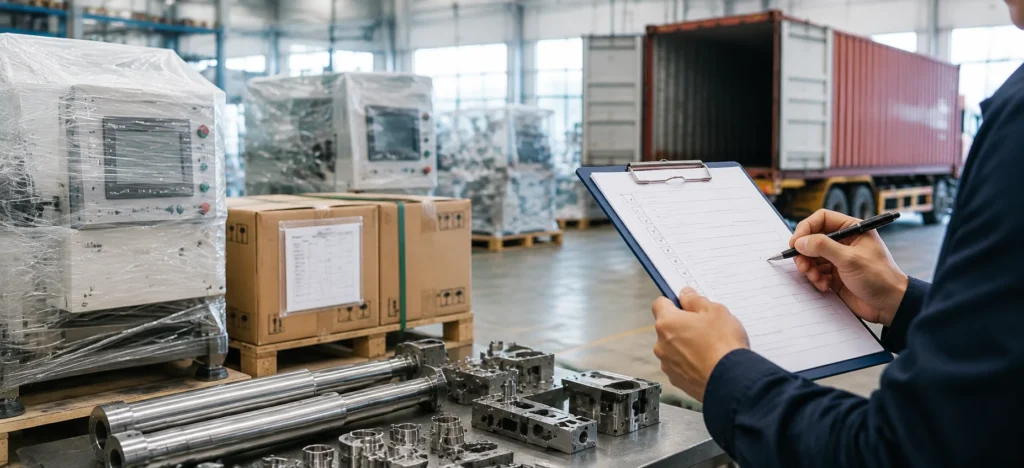
Ask the supplier for finished quantity, packed quantity, model breakdown and warehouse photos. Most goods should be complete, and enough cartons should be packed to check labels, accessories and export protection. The cartons must remain accessible. Goods already inside a sealed container cannot be sampled properly.
A visit that happens too early creates blind spots. The inspector may review workmanship but miss wrong carton marks or incomplete accessory packs. A visit booked too late leaves no repair time before the vessel cutoff. Build at least a small correction window into the shipping plan.
Confirm the exact address and factory contact. If production and packing take place at different sites, decide where the inspection must occur. The supplier should also provide safe power, air, water, test materials or other utilities needed for agreed function checks.
Build the inspection file from approved order records
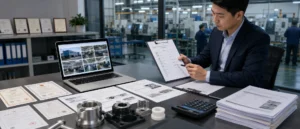
An inspector cannot judge “good quality” in the abstract. Send the purchase order, final specification, approved sample record, artwork, packing instruction and model list. Add known concerns from sampling or production. If the buyer accepted a minor variation, write it down so the inspector does not report an approved feature as a defect.
The inspection file should identify:
- Order number, model codes, colours and quantities.
- Critical dimensions, materials and components.
- Approved appearance samples or clear reference photos.
- Function tests, test method and pass criteria.
- Logo position, labels, barcodes, warnings and manuals.
- Accessories supplied with each unit or carton.
- Inner packing, carton specification, marks and pallet or crate requirements.
Use the latest file version. A common inspection dispute begins when the factory follows revised artwork while the inspector receives the earlier PDF. Our sample management work keeps approvals and revisions tied to the product record.
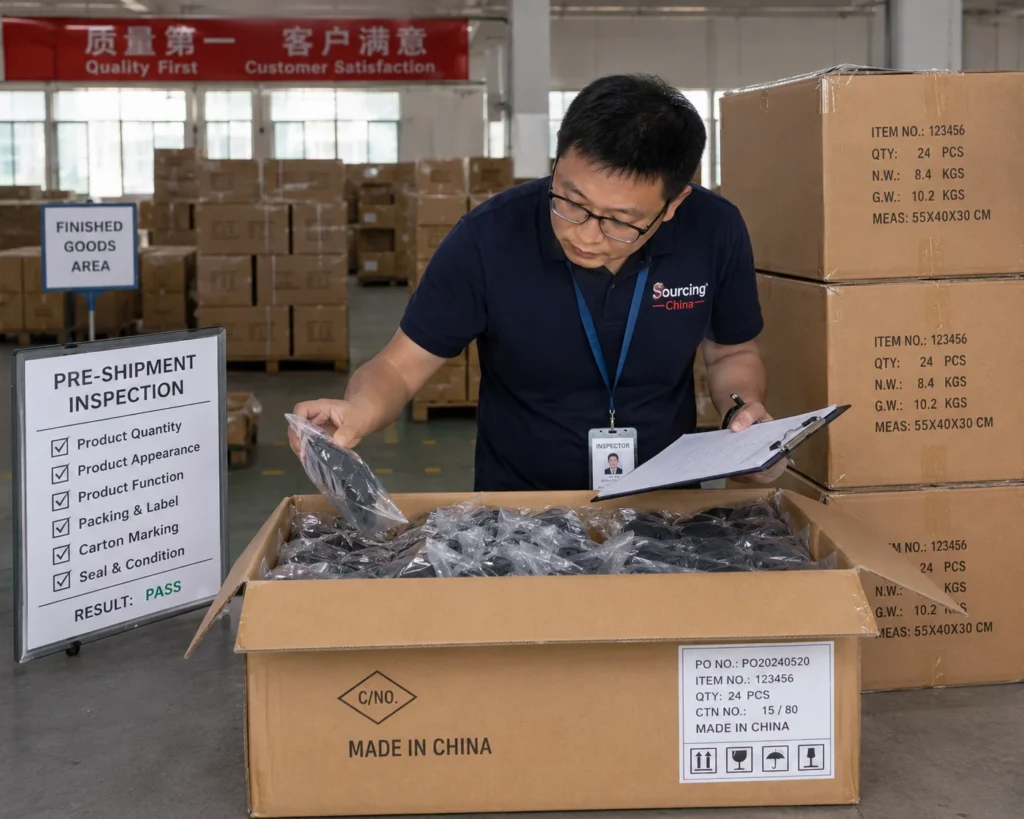
Agree on sampling before the inspector opens cartons
Many consumer-goods inspections use an acceptance-sampling plan instead of checking every unit. The lot size, inspection level and agreed acceptance quality limits determine the sample size and acceptance numbers. The current ISO 2859-1:2026 standard describes acceptance-sampling schemes for inspection by attributes.
Do not copy AQL numbers from another product without thought. A missing safety part does not carry the same consequence as a light cosmetic mark. Define critical, major and minor defects for the actual order. Also decide which checks apply to the full sample and which use a smaller test sample because they take longer or damage the unit.
Random selection matters. The inspector should choose cartons from different positions and open them independently. If factory staff present only prepared cartons, the sample may not represent the shipment. Record the carton numbers selected and the number of units inspected.
Check identity and quantity before workmanship
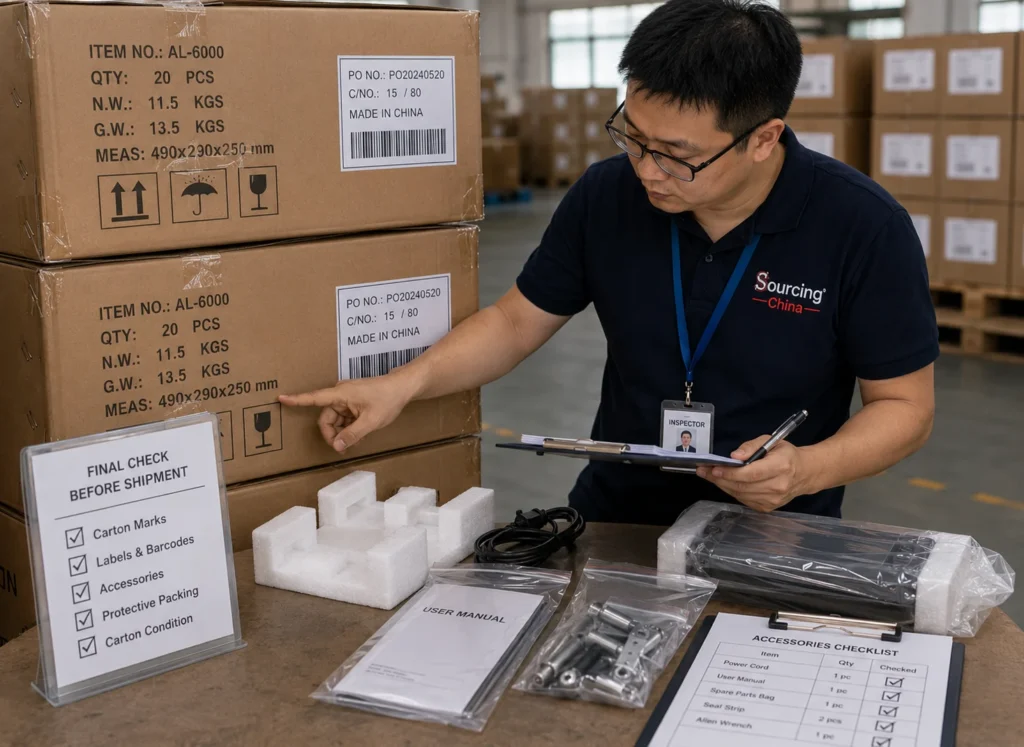
Start with the packing list and physical stock. Count finished cartons where practical, then verify model, colour and quantity across selected cartons. Check product labels against carton labels. A well-made product in the wrong model mix can still cause a costly customer claim.
Look for signs that the sample belongs to the order: production code, logo, finish, packaging and date information. If identical-looking goods for another customer sit nearby, the inspector should take care not to mix lots.
Inspect workmanship with named defect examples
Workmanship checks change with the product. On finished hardware, the inspector may find a rubbed coating, a loose joint or a damaged thread. Printed goods can show blurred text or colour drift. Cartons may arrive crushed at one corner even though the product inside looks sound. Take one close photograph of the fault, then step back for a second image that shows where it sits on the product or pack.
Keep matching defects together in the report. If the same coating mark appears again and again, the buyer needs to know that pattern. A handful of unrelated minor faults may point to several isolated handling mistakes instead. Record the inspected quantity beside the affected quantity. When the pattern looks repetitive, ask the factory to open additional stock and check whether it continues beyond the original sample.
Use practical function and measurement checks
Choose functions that can be performed reliably at the factory. A faucet inspection may include dimensions, accessory fit and a defined leak or pressure check. A smart lock may need mechanical operation, card or keypad access, app connection and accessory confirmation. A packaging machine should run with agreed product or material, using the ordered voltage and configuration.
Write the method and pass limit. “Function OK” is weak evidence. The inspection note should name the action performed, the number of units used, the test duration and the observed reading or behaviour. Some requirements cannot be checked credibly beside the packing line. Chemical analysis, calibrated safety testing or long-duration performance work should go to a suitable laboratory under its own test plan.
Open the complete packing set
Check one full retail pack and one full export carton against the approved list. Lay out the product, manual, accessories, spare parts and protective materials. Scan barcodes when possible. Compare carton marks character by character, especially model codes, quantities, destination marks and handling symbols.
Measure carton dimensions and weight where freight planning depends on them. Look at board strength, tape, straps, pallets and wooden cases. For machinery, photograph the fixing points before the case closes. For finished hardware, confirm that loose metal parts cannot move against decorated surfaces.
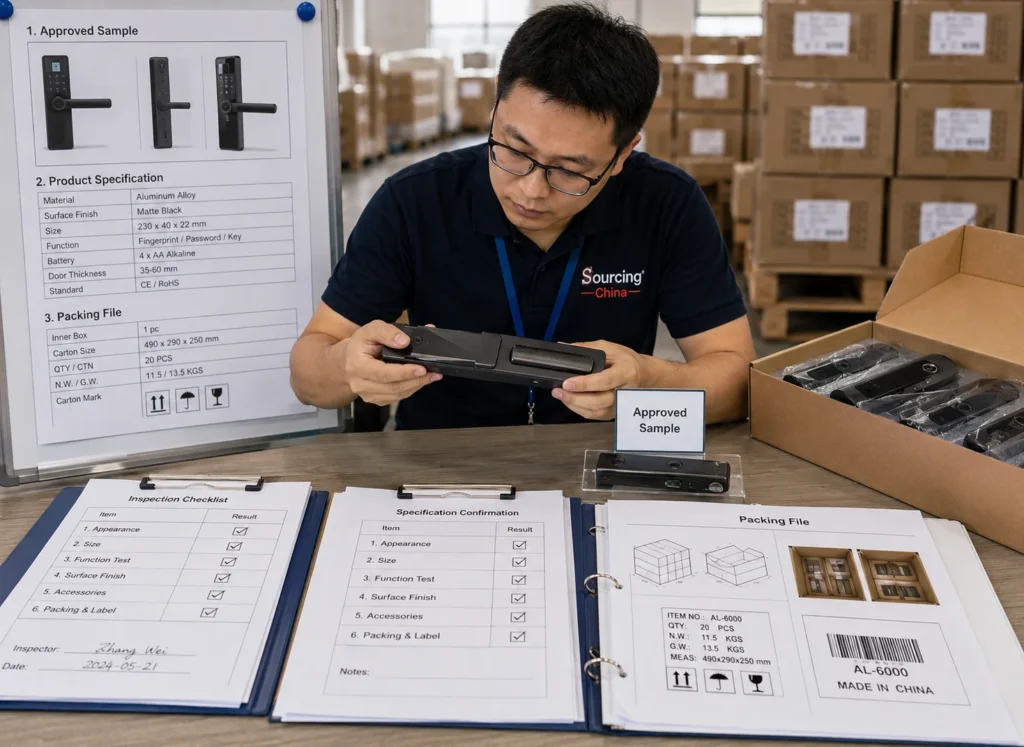
Write findings so the factory can locate the problem
Each important finding needs a model, carton or sample reference. Add the defect count, photos, measurement or test result and the relevant requirement. Avoid labels such as “bad quality” without evidence.
Ask the supplier for a response, but keep that response separate from the inspector’s observation. The factory may explain that a mark can be cleaned or a label can be replaced. That does not mean correction has already happened. Request photos, video or a reinspection after corrective work, depending on risk.
A passed sampling result is not a promise that every unit is perfect. It means the inspected sample met the agreed acceptance rule. The buyer still decides whether individual serious findings need action.
Turn the report into a shipment decision
Read the summary, then open the defect photos and test records. Check whether critical points were actually completed. If the report is incomplete, ask questions before releasing the balance or loading the container.
Possible decisions include:
- Release: findings fall within the agreed rule and no separate risk blocks shipment.
- Correct and document: the issue is limited and correction can be shown clearly.
- Sort and reinspect: repeated defects require the factory to screen the lot.
- Accept with written condition: the buyer knowingly accepts a defined deviation.
- Hold: identity, quantity, function, safety marking or packing risk remains unresolved.
Do not ask the inspector to negotiate commercial compensation or make the final release decision unless that authority was explicitly assigned. The report should remain an evidence record.
Understand what PSI does not cover
A pre-shipment inspection cannot reconstruct the full production history. It may not confirm hidden materials, long-term durability, chemical composition, cybersecurity or regulatory compliance. Laboratory tests, certificates and technical files serve different purposes.
PSI also arrives late. If the order uses a new component or difficult finish, earlier checks may be more useful. Production follow-up can track materials, samples and packing preparation before the final week. The quality inspection service can then focus on finished goods and shipment readiness.
Pre-shipment inspection checklist summary
| Stage | Record needed | Reason to pause |
|---|---|---|
| Readiness | Finished and packed quantity, address, accessible cartons | Goods incomplete or already loaded |
| Sampling | Lot size, sample plan, defect classes and limits | Factory controls carton selection |
| Identity | Models, colours, quantities and labels | Wrong mix or unclear lot |
| Product | Workmanship, dimensions and function results | Critical failure or repeated major issue |
| Packing | Accessories, artwork, carton marks and protection | Missing items or wrong export marks |
| Decision | Defect evidence and corrective-action status | Correction claimed but not verified |
Practical points to settle before the inspection date
At what production stage should the inspector visit?
Book it when most goods are finished and enough are packed to check export presentation. Leave time for correction before loading.
Does passing AQL mean every unit is defect-free?
No. Acceptance sampling evaluates a randomly selected sample against agreed limits. It does not inspect every piece or guarantee zero defects.
Who should choose the inspected cartons?
The inspector should select them across the available lot. Factory-prepared sample cartons weaken the independence of the result.
Should the buyer pay the balance after a passed report?
The buyer should review the full report and contract terms first. A pass result is important evidence, but unresolved critical findings or missing tests may still require action.
Can PSI replace laboratory testing?
No. PSI covers visible goods and agreed on-site checks. Formal safety, chemical or performance compliance may require an accredited laboratory and separate documentation.