Eyewear Sourcing in China With Sample Versions Under Control
Eyewear sourcing can look simple until the buyer compares frame material, lens type, hinge quality, color difference, logo method, temple printing, pouch, case and market testing needs. We help turn those details into supplier questions and sample records.
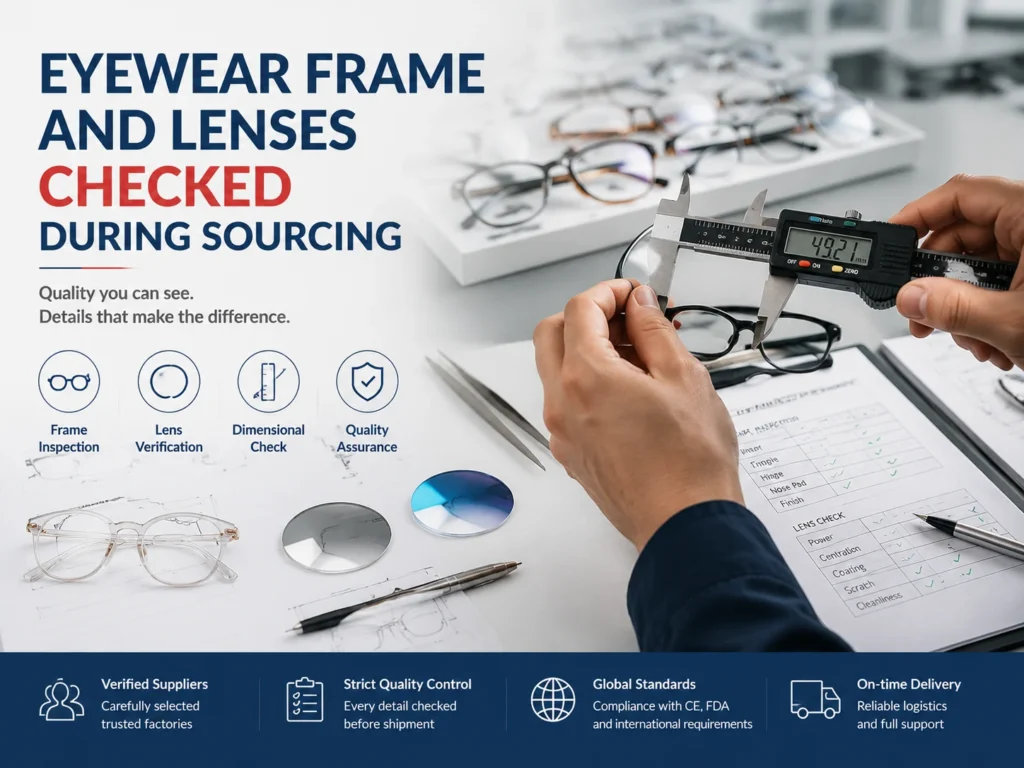
Acetate, TR90, metal, mixed
Color, logo, finish
Hinge, temple, lens
Case, pouch, card, carton
Sample Control
Eyewear samples need version notes before bulk production starts
A supplier may improve one detail in a second sample and accidentally change another: hinge feel, color depth, lens tint, logo size, temple curve or packing insert. The buyer needs to know which sample version was approved and which details should not move in bulk production.
We help compare eyewear samples under practical conditions. Photos are useful, but color and finish often need clear notes, physical reference, supplier confirmation and inspection points before shipment.
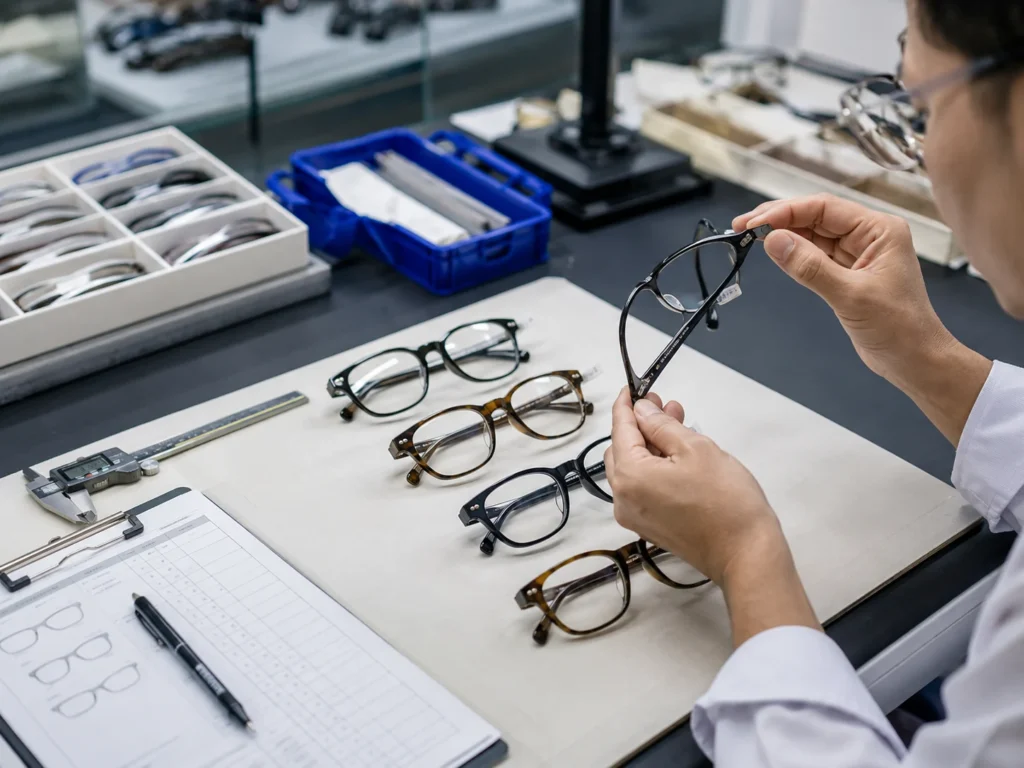
- Frame reference. Record material, shape, size, hinge, temple, nose pad, screw and finish notes.
- Lens reference. Confirm lens type, tint, UV claim, market test need and supplier document relevance.
- Logo and packing. Check logo method, position, case, pouch, card, label, barcode and carton plan.
- Bulk inspection. Review visible finish, color grouping, loose parts, lens condition, packing and quantity before release.
Specification Checks
Eyewear quotes should explain the material, lens and packing choices
Two frames may look similar in supplier photos but differ in material, hinge, lens, logo, case and testing. We ask suppliers to make these differences clear before the buyer selects samples.
Reference Frame
Material, shape, size, temple curve, nose pad, hinge and screw notes are captured from the first usable sample.
Lens Choice
Lens material, tint, UV claim, polarization, optical concern and test document need are separated from frame appearance.
Brand Details
Temple print, metal logo, laser mark, lens sticker, case logo and artwork approval are tied to a clear sample version.
Packing Set
Pouch, case, cleaning cloth, card, barcode, inner box, carton grouping and SKU separation are checked together.
Eyewear color notes should say how the sample was judged
A transparent frame, tortoise pattern or plated temple can look different by light and angle. We record the buyer’s approved reference and ask the supplier which parts may vary in bulk.
Claims need the right kind of evidence
UV, polarization and optical claims may need documents or laboratory testing. A sourcing note can ask the right question, but it does not replace formal market proof when that proof is required.
Frame and Lens Record
Eyewear approval should freeze fit, feel and accessory set
Frame sourcing often turns on details that are hard to judge from one photo: temple angle, hinge tension, nose pad comfort, lens tint, acetate pattern, TR90 flexibility, screw tightness and how the case protects the frame during shipping.
We keep those points separate from general appearance. That helps the buyer notice when a supplier improves one sample but quietly changes the hinge, lens shade, pouch, cleaning cloth or barcode set.
- Record temple length, bridge, lens width and hinge feel where relevant.
- Mark whether the approved lens is clear, tinted, polarized or only a visual sample.
- Keep case, pouch, cloth, card and barcode tied to the selected SKU.
- Use supplier photos as a record, but rely on physical reference for strict color decisions.
Bulk Risk
Eyewear risk often appears as color drift, loose parts or packing mix-up
A small color difference may be acceptable for one buyer and unacceptable for another. A loose hinge may be a few defective units or a repeated assembly issue. Mixed SKU packing can create trouble even when the frames themselves are acceptable.
We set inspection notes around what the buyer cares about most: visible finish, lens condition, hinge feel, logo position, packing set and quantity by color or model.
Points to confirm early
- Color reference and acceptable tolerance
- Lens claim and document need
- Logo position and artwork approval
- Case, pouch, cloth and card set
- Quantity by color and model
- Bulk photos under normal light
Frame, Lens and Branding Supply Chain
Eyewear suppliers may be strong in frames, lenses, branding or packing, but not all of them
An eyewear supplier that shows many styles may still rely on outside lens suppliers, hinge suppliers, logo workshops or case makers. The important split is practical: acetate cutting, TR90 injection, metal frame work, hinge fitting, lens choice, surface finish, logo application and packing assembly may not sit under one roof.
Frame Source
Acetate, TR90, PC, stainless, alloy or mixed material; size, temple, nose pad, hinge and screw details.
Lens Source
Lens material, tint, UV claim, polarization, optical concern and whether formal market testing is needed.
Branding Work
Temple print, metal logo, laser mark, lens sticker, case logo, card artwork and approval sample.
What Must Be Fixed Before Eyewear Sampling
Frame material, lens, hinge, color, logo method, MOQ by color, case, pouch, cloth, barcode and SKU grouping. These points should be tied to the approved version through sample management before bulk production.
FAQ
Questions buyers ask about eyewear sourcing in China
Can you compare eyewear samples from different suppliers?
Yes. We can record frame, lens, hinge, color, logo and packing differences so the buyer can select a version for production.
What details affect eyewear price?
Frame material, lens type, hinge, finish, logo method, case, pouch, card, MOQ, testing and packing can all change price.
Can you confirm UV or optical claims?
We can ask for documents and supplier explanations, but formal proof needs proper testing by a qualified laboratory when required.
Should color be checked by photo only?
Photos help, but transparent frames, plated parts and patterned materials can shift by light. A physical sample or approved reference is better for strict color decisions.
What should be inspected before shipment?
Frame finish, lens condition, hinge, logo, color grouping, case or pouch, card, barcode, carton marks and quantity by SKU are common checks.
Send the eyewear reference