
Material, color and bulk-lot coordination from Wenzhou

Button Sourcing in China Where Small Details Decide the Order

We help apparel buyers define buttons, compare supplier offers and keep the approved sample connected to the garment and bulk delivery.

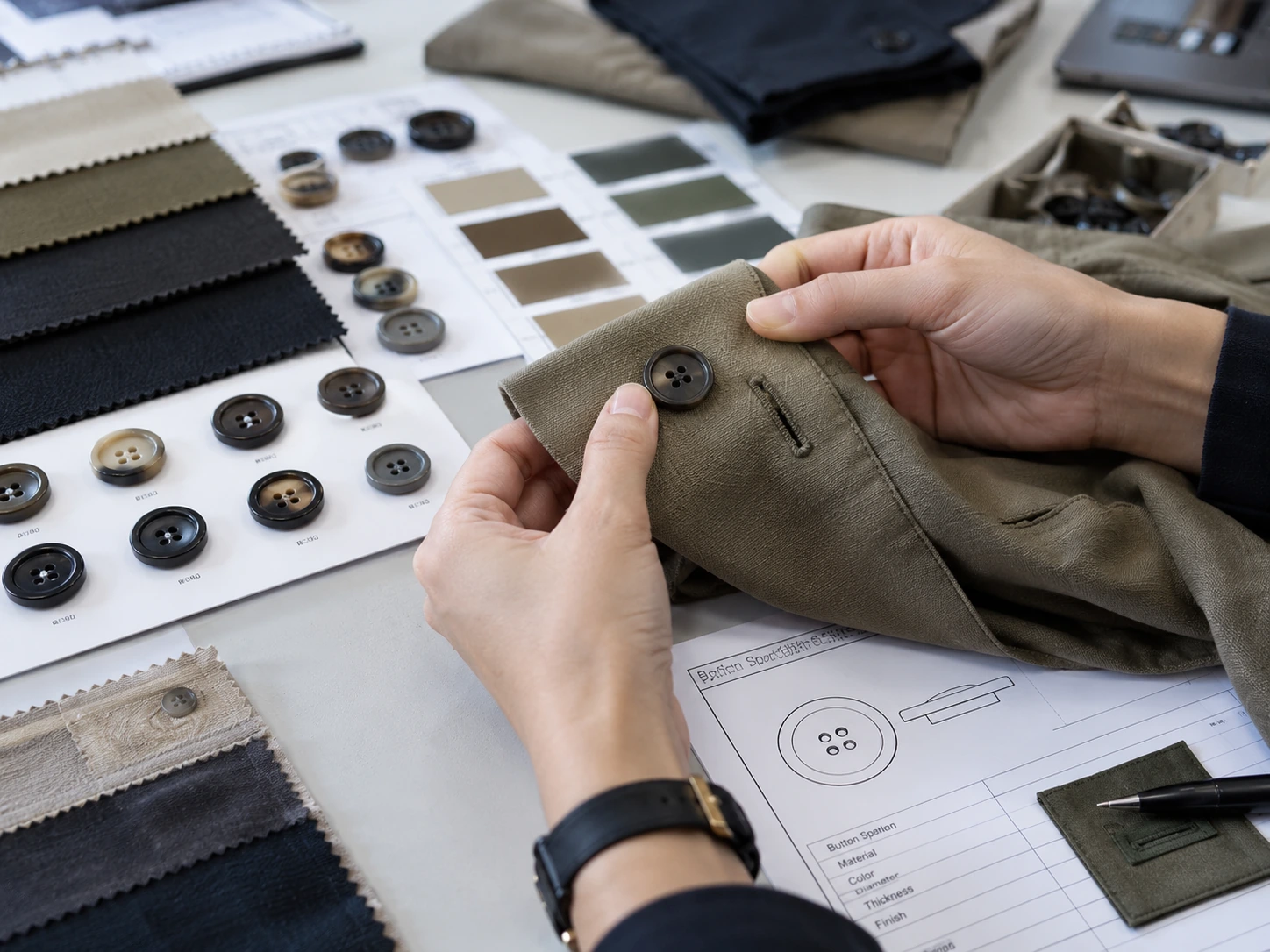
Garment button sourcing meeting with fabric swatches and button sample trays

Direct answer

How do you source garment buttons from China?

Start with the garment, button type, material, face and back design, size, thickness, holes or shank, color, finish, logo, quantity by color and packing method. Give suitable suppliers the same specification and physical or color reference. Review samples on the actual fabric and buttonhole before production. Keep an approved sample with photographs and measurements, then check bulk color lots, visible finish, count and packing against that reference. Testing depends on the garment, material and destination market, so buyers should define required methods and acceptance criteria with an appropriate laboratory or compliance specialist.

Button and fabric fit review with color cards and garment reference

Garment fit

Approve the button on the garment, not only on a sample card

A button may look correct alone but feel too thick, catch the buttonhole, pull the fabric or appear different under store lighting. The garment team should review size, edge shape, weight, sewing method and color beside the actual fabric.

Fabric+Buttonhole+Button=Fit decision

If garment production and button production run separately, identify who holds the approved reference and how changes are communicated to the sewing factory.

Specification map

Keep the small decisions visible

Use the same eight points for quotations, samples and the bulk order.

Material

Resin, metal, shell, wood, corozo or another agreed composition.

Color

Physical reference, color code, viewing condition and accepted range.

Plating and finish

Gloss, texture, plating, coating, aged effect and front-to-back appearance.

Logo

Engraved, embossed, printed or laser decoration with approved artwork and direction.

Size and fit

Diameter or ligne, thickness, holes, shank, edge and garment buttonhole.

Approved sample

Sample code, date, final material, tooling, color and open changes.

MOQ and order mix

Minimum by design, size, finish and color, plus any assortment limits.

Bulk consistency

Color lots, plating, dimensions, visible defects, count and packing breakdown.

Sample record

Keep color and construction decisions in one approval sheet

Supplier names for colors and finishes are not universal standards. Record the physical reference, color code where relevant, viewing condition and acceptable range. Photographs help communication but should not replace a retained sample when small color or texture differences matter.

For custom molds or logos, confirm the face, reverse, edge and orientation. Mark whether the sample used final material and production tooling. If it did not, record what still requires approval.

Bulk-order control

Watch color lots, defects, counting and assortment

01

Confirm production sample and packing breakdown.

02

Record any material, plating or color-lot change.

03

Check visible defects and dimensions against agreed limits.

04

Verify quantity, color assortment, labels and carton marks.

Inspection can sample visible and measurable order details under the agreed scope. It cannot prove every piece or replace specialized chemical, strength, wash or corrosion testing.

Small components need a surprisingly precise approval record

Buttons can look simple while differing in diameter, thickness, shank or hole construction, finish, color and packing count. For a garment order, keep the garment reference or fabric swatch alongside the button sample so appearance and attachment requirements are judged in context.

Button approval record

  • Diameter, thickness and construction
  • Color or finish reference
  • Attachment method and garment context
  • Counting, assortment and packing requirement

The approved sample should identify the exact version being ordered, especially when color lots or finishes can vary.