
Sample Management in China Before Suppliers Start Bulk Production
Samples often look simple until version two arrives with a different color, cable, carton, logo method or accessory. We help buyers keep supplier samples labeled, photographed, measured and tied to buyer comments before production details are frozen.
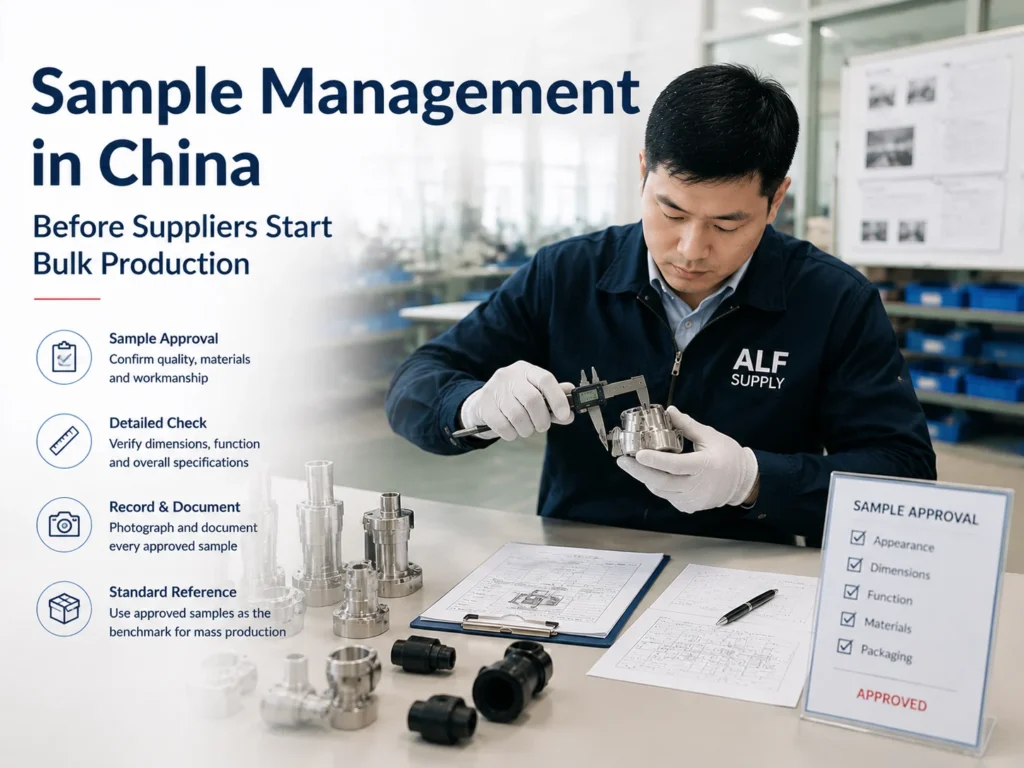
Collect, label, photograph
Supplier, date, revision note
Changes sent back clearly
Golden sample before bulk goods
Sample Desk
The first job is to stop samples from becoming loose objects in a box
When three suppliers send similar items, the differences can be small. One lock has a different battery cover. One faucet has a different cartridge. One pair of glasses uses a different hinge. One packing machine test video uses a lighter pouch. Without a record, the buyer may approve one thing and the supplier may prepare another.
We treat each sample as a file: supplier name, arrival date, version number, product photos, visible measurements, packing condition, supplier notes, buyer comments and next action. The record does not replace the buyer’s own testing, but it keeps the conversation from drifting after the second or third revision.
- Arrival. Record supplier, courier number, sample date, item condition and whether the package includes accessories, labels or instruction sheets.
- First photo set. Photograph front, back, side, key details, packing, labels, accessories and any visible defect before the sample moves again.
- Version label. Mark each item as standard sample, revised sample, accepted sample, rejected sample or comparison sample.
- Buyer comment loop. Send comments back to the supplier with photos or short notes so the next version can be checked against a clear request.
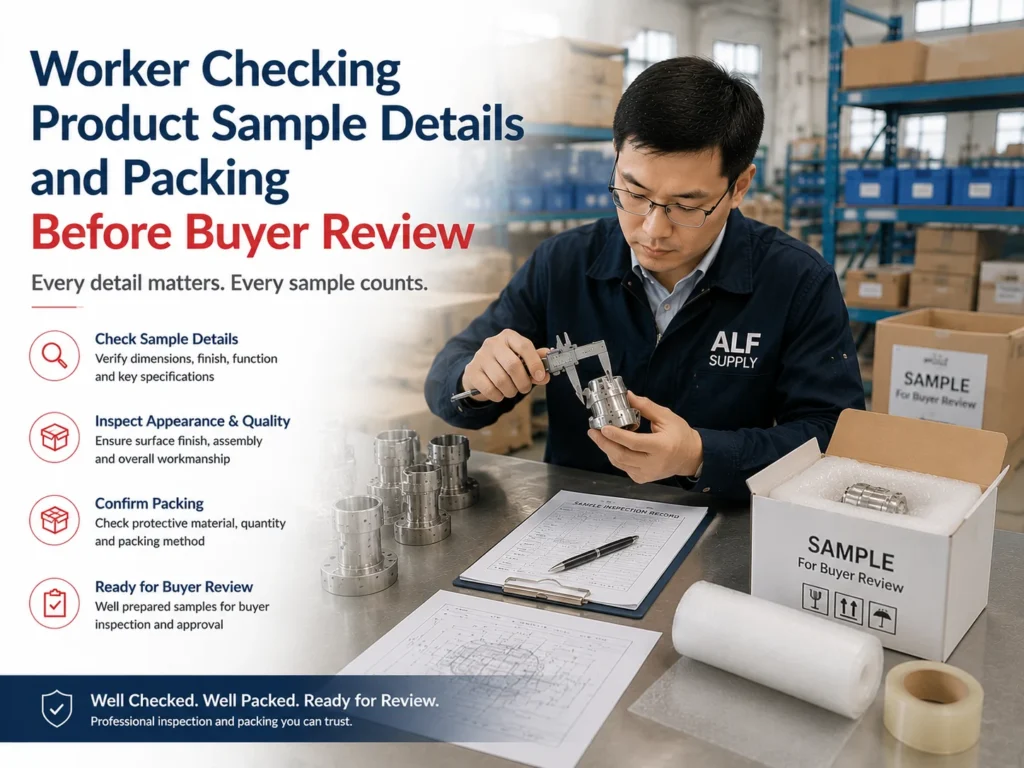
Sample Log
Each sample needs a short record that can be checked later
The sample log is simple on purpose. It should be easy to read when production starts, when an inspector compares goods, or when the buyer reorders months later.
Supplier name, sample date, version mark, courier number, product model, color, logo method and whether it is standard or revised.
Appearance, size, weight where practical, finish, accessories, label position, packing, instruction sheet and any defect seen before testing.
Approved points, rejected points, requested changes, unanswered supplier questions and what must not change in bulk production.
Whether the supplier accepts the change, needs a new sample fee, raises MOQ, changes lead time or says the request needs tooling.
Hold for comparison, ship to buyer, request revision, order duplicate sample, mark as golden sample or reject and replace supplier.
Before Arrival
What the buyer should send before the visit is booked
The same factory can look different depending on what the visitor is trying to check. A visit for a new supplier is not the same as a visit after a sample dispute. A visit before a large deposit is not the same as a quick address check.
Company name, Chinese name if available, contact person, phone, address, quotation, proforma invoice and any previous documents from the supplier.
Product photo, model, sample version, drawings, target quantity, buyer comments, required materials, testing concerns and accepted sample photos if any.
Address check, factory role check, production capacity, equipment confirmation, sample problem, packing concern, export preparation or readiness before deposit.
Very low price, changed company name, delayed sample, certificate doubt, suspected outsourcing, weak carton, missing test video or supplier answers that keep changing.
Version Labels
Four sample types should not be mixed together
Many sample problems come from a simple mix-up. A supplier sends a standard sample first, then a revised sample after buyer comments, then a pre-production sample before mass production. If those three are not labeled, the wrong item can become the production reference.
A
Supplier standard sample
This shows what the supplier normally makes. It may not match the buyer’s target material, color, logo, packing or certificate requirement.
B
Revised sample
This version should answer buyer comments. We check whether the requested change was made and whether the supplier changed anything else at the same time.
C
Pre-production sample
This should be close to bulk production. Material, component, color, packing and label details should be checked before the buyer approves production.
G
Golden sample
This is the accepted reference. It should be marked, photographed and kept separate so bulk goods can be compared against the approved version.
Appearance and Dimensions
A sample record should catch differences that photos alone can hide
A photo may hide a color shift, weak hinge, thin carton, rough finish, loose button or small size difference. We record visible details before samples are sent onward. The depth depends on product type. A button sample may need size, holes, color and surface effect. A smart lock sample may need lock body, panel, battery cover, keys and packing. A machine sample process may involve trial materials and test video notes rather than a small physical item.
We do not claim laboratory precision. If a buyer needs formal material analysis, safety testing, optical testing, chemical testing or engineering measurement, that should be arranged separately. The sample record is used to keep supplier discussion and buyer approval clear.
Typical photo angles
- Full product from several sides
- Logo, label and color detail
- Accessories and spare parts
- Inner box and export carton
- Visible defects or mismatched parts
- Comparison against previous version
Courier Consolidation
Multiple supplier samples can be consolidated when the plan is practical
Courier cost can become messy when several suppliers send samples separately. Where the product size, timing and supplier locations allow, we can collect samples, check arrival condition, label each supplier version and ship one consolidated package to the buyer.
Arrival check
Record package condition, courier number, sample quantity, accessories, labels and whether anything appears damaged or missing on arrival.
Supplier grouping
Keep samples from different suppliers separated with clear labels so the buyer does not confuse similar products after opening the package.
Photo before dispatch
Take a final photo set of the sample group, packing and labels before international courier pickup.
Courier notes
Share tracking number, declared sample description where applicable and any packing limitation before the package leaves China.
Buyer Comments
Revision requests need to be written like production instructions
A buyer may send comments such as “make it darker,” “packing is weak,” “logo is too small” or “sample feels different.” Suppliers need those comments turned into clearer points. Which color reference? Which carton strength? Which logo size and position? Which part feels different: button, hinge, handle, cable, battery cover or surface finish?
We turn loose comments into supplier questions, then track the answer. If the supplier says a color change raises MOQ, that goes into the record. If changing a logo method needs a new mold or artwork, that point should be settled before production starts.
- Comment received. Buyer feedback is attached to the sample version, not just left in a chat message.
- Supplier question. The comment is rewritten into product terms the supplier can answer: size, material, color, logo, packing, component or test condition.
- Reply recorded. Supplier answer, new sample timing, cost change, MOQ change or refusal is added to the sample log.
- Approval separated. Accepted details are kept apart from ideas still under discussion.
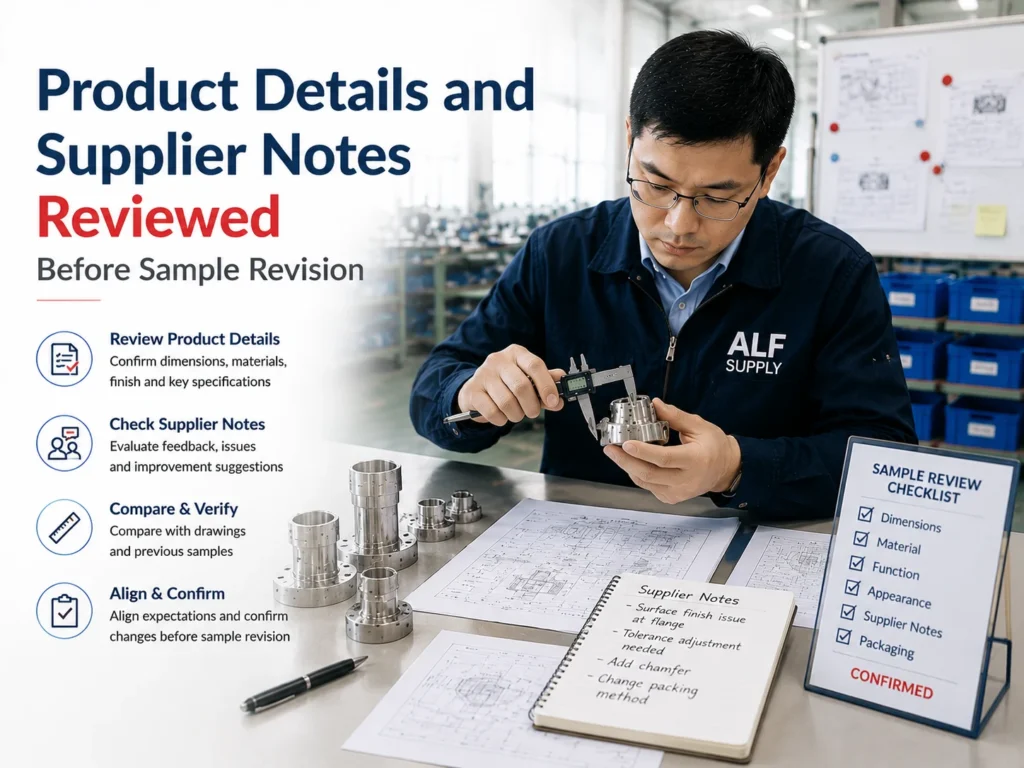
Golden Sample
The accepted sample should be frozen before bulk production is released
A golden sample is useful only when everyone knows which sample it is. It should not be a loose phrase in an email. We mark the accepted version, record the photos, keep buyer comments with it and list the points that should not change in production.
Supplier name, model, version date, color, material, accessory set and any buyer-approved customization.
Inner box, carton, label, instruction sheet, barcode, warning mark, spare parts bag and carton mark if already decided.
Parts that must not change without buyer approval, such as cartridge, lock body, cable, hinge, color, logo method or machine test condition.
Items still waiting for buyer approval, supplier correction, lab testing, packaging artwork, manual translation or inspection criteria.
Bulk Difference Control
Sample management is meant to prevent quiet changes during production
The hardest sample problem appears later: the buyer approved one version, but mass production uses another component, finish, carton or label. The sample record helps production follow-up and inspection teams know what to compare.
Before production
Supplier confirms accepted sample, frozen points, packaging artwork, revision history and whether any production change is planned.
During production
Photos or videos can be checked against the accepted sample record for color, components, labels, accessories, carton and visible finish.
Before shipment
Inspection notes can compare finished goods with the golden sample, buyer comments and approved packing details.
When Sample Management Is Not Enough
Some sample questions need testing, engineering or a factory visit
Sample records can show visible differences, buyer comments and supplier replies. They cannot prove hidden material, long-term durability, legal compliance or mass production capacity by themselves. A supplier may make one good sample and still struggle with bulk consistency.
If the buyer needs proof of chemical composition, electrical safety, machine guarding, structural safety, optical performance or food-contact material, the sample should go to the right specialist or laboratory. If the concern is whether the supplier can repeat the sample at scale, a factory audit or production follow-up may be the better next check.
Use another check when
- Material identity needs lab testing
- Performance depends on long-run use
- Safety or legal compliance is involved
- Supplier capacity is still unproven
- Production has already started
- Finished goods need inspection
FAQ
Questions buyers ask about sample management in China
Can you collect samples from several suppliers?
Yes, when supplier location, sample size and timing are practical. Each sample should be labeled by supplier and version before it is consolidated or sent onward.
Can you check sample quality for me?
We can record visible appearance, dimensions where practical, packing, accessories and obvious defects. Formal performance testing, safety testing or material testing should be handled separately.
What is a golden sample?
It is the buyer-accepted reference sample for production. It should be marked with supplier name, version date, photos and frozen details so later goods can be compared against it.
What if a supplier changes the sample without telling us?
The sample log helps show what changed. We compare the new version with the earlier record and ask the supplier whether the change affects cost, MOQ, lead time, testing or bulk production.
Can samples be shipped together to reduce courier cost?
Often yes, if timing and product size allow. We can group samples, photograph the package, label supplier versions and share courier tracking before dispatch.
When should sample management move into production follow-up?
Once the buyer approves a supplier and golden sample, the next work is usually confirming materials, production start, packing details and inspection readiness.
Send the sample situation you need organized