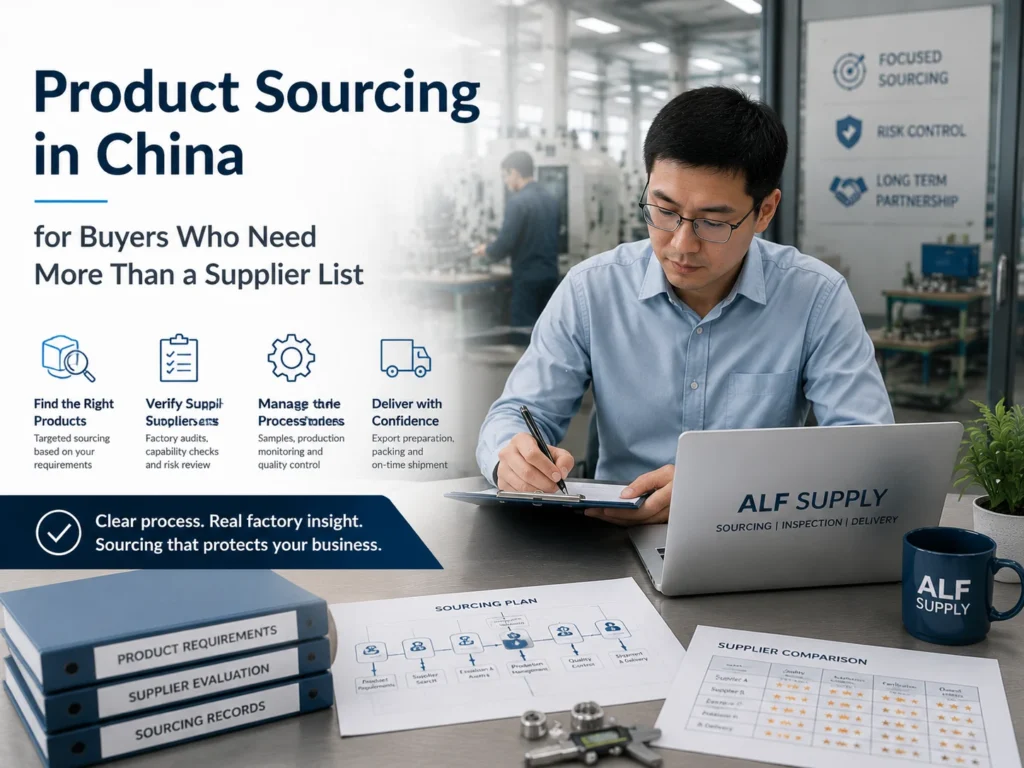
Product Sourcing in China for Buyers Who Need More Than a Supplier List
A product name is rarely enough to source well. We help turn a photo, old quotation, sample or rough specification into supplier questions that can be compared: material, size, MOQ, OEM changes, packing, certificates, sample timing and inspection points.
Photos, samples, drawings, old quotes
Supplier search and first screening
MOQ, price basis, OEM fit
Samples, verification or production follow-up
Buyer Summary
Product sourcing starts by making the requirement hard to misunderstand
Many buyers start with something imperfect: a catalog photo, a sample from a previous supplier, a screenshot from a marketplace, a drawing without material notes, or a quotation that only says “smart lock” or “packing machine.” That is enough to begin supplier search, but it is not enough to judge which supplier is close to the real requirement.
Our first job is to slow the request down. A faucet inquiry needs body material, cartridge, finish, accessory set and test expectations. A smart lock inquiry needs door thickness, lock body, opening direction, App system, battery and backup key. A machine inquiry needs product size, packing material, target speed, voltage, air source and trial material. Once these points are visible, supplier replies become much easier to compare.
Useful when
- You have a product idea or sample but do not know which Chinese suppliers are a real fit.
- You already received quotations and cannot tell whether the suppliers quoted the same item.
- You need OEM changes, private label packing or samples, but the supplier has not confirmed the details that affect cost and risk.
Starting Point
We can start from rough information, then build a supplier-ready brief
The buyer does not need a perfect specification sheet on day one. The first message can include what is already available. We then mark missing information and decide which points should be asked before any serious price comparison.
Photos, drawings, sample photos, videos, marketplace links, old quotations, rejected samples or competitor references.
Expected quantity, first order size, repeat order plan, target budget, delivery deadline and whether samples are needed before choosing a supplier.
Destination country, retail or project use, voltage, label needs, safety concern, certificate request, packaging style and private label plans.
Wrong material, weak cartons, delayed samples, color difference, certificate mismatch, missing accessories or a supplier who changed details after quoting.
Before Arrival
What the buyer should send before the visit is booked
The same factory can look different depending on what the visitor is trying to check. A visit for a new supplier is not the same as a visit after a sample dispute. A visit before a large deposit is not the same as a quick address check.
Company name, Chinese name if available, contact person, phone, address, quotation, proforma invoice and any previous documents from the supplier.
Product photo, model, sample version, drawings, target quantity, buyer comments, required materials, testing concerns and accepted sample photos if any.
Address check, factory role check, production capacity, equipment confirmation, sample problem, packing concern, export preparation or readiness before deposit.
Very low price, changed company name, delayed sample, certificate doubt, suspected outsourcing, weak carton, missing test video or supplier answers that keep changing.
Search Work
Supplier search is filtered by product match, not only by who replies first
A supplier who answers in ten minutes is convenient. It still leaves basic buying questions open: do they make this product often, did they quote the same material and accessory set, can they explain why their MOQ is higher, and can they show how the price changes if the buyer changes packing or logo method?
Requirement sorting
We separate fixed requirements from flexible points. If a buyer must use a certain material, app system, plug, carton strength or test standard, that point goes into the first supplier questions.
Supplier longlist
We look for suppliers whose product range is close to the requirement. A catalog match is not enough; we check whether the supplier can answer product-specific questions.
First screening
Early screening looks at supplier role, product match, MOQ, sample availability, customization attitude, export experience, communication quality and visible risk points.
Shortlist notes
The buyer receives notes showing why a supplier remains under consideration, which claims are still unproven and which details should be checked before samples or payment.
Supplier Role
Factory, trading company or assembler: the role should be clear before price comparison
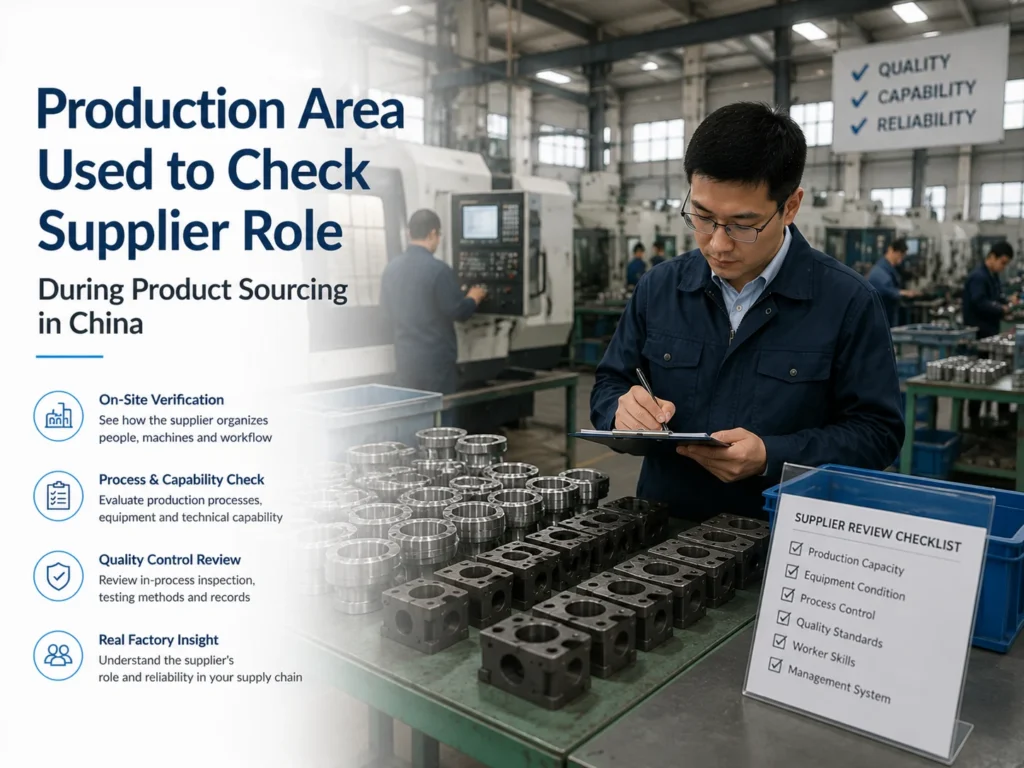
A factory is not always better, and a trading company is not always a problem. What matters is knowing who controls the key part of the product. A smart lock supplier may assemble parts from outside workshops. A faucet supplier may outsource plating. A packaging machine maker may weld the frame in-house, then use bought-in motors, sensors and control parts. That can be normal, but it should appear in the buyer’s notes before warranty, spare parts and testing are discussed.
- Factory signs. Product range, workshop photos, equipment, production flow, test area, packing area and staff answers should match the claimed capability.
- Trading company signs. Broad product range, fast quote collection, limited technical answers or changing supplier information may mean the company is coordinating rather than producing.
- Assembler signs. The supplier may control assembly and final testing while key parts come from outside workshops. This needs clear component and warranty questions.
- Project coordinator signs. For some complex orders, one company may organize several factories. The buyer should know which parts are controlled directly and which are subcontracted.
MOQ and Price
A quotation is not ready until the price basis is visible
Two suppliers can quote the same product name while offering different materials, accessories, packing, test scope, sample terms or lead times. We read the quotation as a product record, not only a number.
Minimum order quantity may change by color, logo, mold, packing, raw material batch, accessory set or supplier production schedule.
The buyer needs to know what is included: material, accessories, inner box, export carton, label, test, warranty, spare parts and normal packing.
Sample fee, customization fee, courier charge, sample lead time and whether the fee can be deducted from a bulk order should be written down.
Delivery timing depends on material readiness, tooling, sample approval, production queue, packing and inspection scheduling.
A lower price may mean a thinner material, different component, shorter warranty, weaker carton, lower-grade finish or missing certificate.
OEM Feasibility
Customization should be checked before suppliers say yes too quickly
Many suppliers answer “yes” to OEM requests before checking the detail that decides cost or feasibility. A logo may need a different mold, laser mark, pad printing, silk screen or sticker. A private color may require a higher MOQ. A new size may need tooling. A different plug, app, language, carton or instruction sheet may change lead time.
We ask what actually needs to change and who controls that change. If the supplier only changes the outer box, that is a different project from changing a lock body, machine structure or electrical component. The buyer should know which changes are simple, which need sample confirmation and which may require testing or engineering review.
OEM questions we often ask
- Which parts are standard and which parts change
- Whether tooling, mold or artwork is needed
- MOQ for color, logo, packing or component changes
- Sample lead time and sample approval steps
- Whether changed parts affect testing or certificates
- Who owns the mold, artwork or final sample record
Sample Link
Product sourcing should lead into sample control before production starts
Finding a supplier is only the first part. The buyer still needs to see whether the sample matches the quotation and whether the supplier can repeat that sample in bulk. A good sample record helps prevent quiet changes later.
Accepted version
We mark supplier name, sample date, visible details and buyer comments so the accepted version can be compared with production later.
Revision trail
If the buyer asks for a logo change, color change, carton change or component change, that request should be recorded with the supplier’s reply.
Physical differences
Two samples that look similar in a photo may differ in weight, finish, accessory set, cable, hinge, button feel, carton or label position.
Next service
Once a supplier is selected, the project may move into Sample Management, Production Follow-up or inspection planning.
Screening Result
What buyers receive from product sourcing work
The format depends on the product and the number of suppliers checked, but the buyer should receive more than a list of company names. The useful result is a working comparison: who can quote the exact model, who changed the packing or accessory set, who still owes proof, and which file needs attention before money is sent.
Supplier comparison notes
Supplier role, product match, MOQ, quotation basis, sample availability, lead time, communication quality and visible risk points.
Open question list
Unconfirmed details such as material grade, accessory list, certificate model, packing method, test condition, OEM limits or warranty terms.
Recommended next check
Depending on the project, the next check may be supplier verification, sample order, factory visit, quotation revision, engineering review or inspection planning.
Service Limits
Product sourcing reduces blind spots, but it does not make a supplier risk-free
Supplier search can find options, but it cannot prove future production quality by itself. A supplier may answer the first questions well and still make mistakes during sample revision, material purchase or packing. A quotation can be clear and still need a factory visit or sample check before the buyer pays a deposit.
We keep these limits visible. The buyer approves the final supplier, order quantity, accepted sample, payment terms and shipment release. If the product needs laboratory testing, legal review, certified engineering or a freight decision, those tasks should be handled by the right specialist.
We do not claim
- The lowest quotation is the best supplier
- A supplier reply proves production capacity
- A catalog photo proves the bulk product
- One sample proves every future shipment
- A sourcing note replaces formal testing
FAQ
Questions buyers ask about product sourcing in China
Can you find manufacturers in China from only a photo?
We can start from a photo, but we will ask for size, material, target quantity, market, packing and any required function before supplier comparison becomes serious.
Can you tell whether a supplier is a factory or trading company?
We can look for signs such as product focus, workshop information, registration details, address, equipment, sample answers and technical replies. Some suppliers are mixed or assembler-based, so the result is usually a practical role note rather than a simple label.
How many suppliers do you compare?
That depends on product complexity and the buyer’s goal. A narrow product with clear details may need a small shortlist. A vague request may need broader search before serious comparison.
Can you help with OEM or private label products?
Yes, when the change is clear enough to ask suppliers. We check logo method, color, packing, mold, MOQ, sample lead time, tooling cost and whether the change affects testing or certificates.
Do you negotiate price for the buyer?
We can ask suppliers to clarify price basis and revise quotations when details are missing. The buyer still approves target price, payment terms, supplier choice and final order commitment.
After two or three suppliers look possible, what do we check?
We usually pick the next check from the weak spot in the file. If the supplier role is unclear, verification comes first. If the quote is thin, we ask for a revised quotation. If the product detail is still uncertain, we move to samples. If timing is already tight, we prepare production and inspection questions before the buyer pays a deposit.
Send the product you want to source