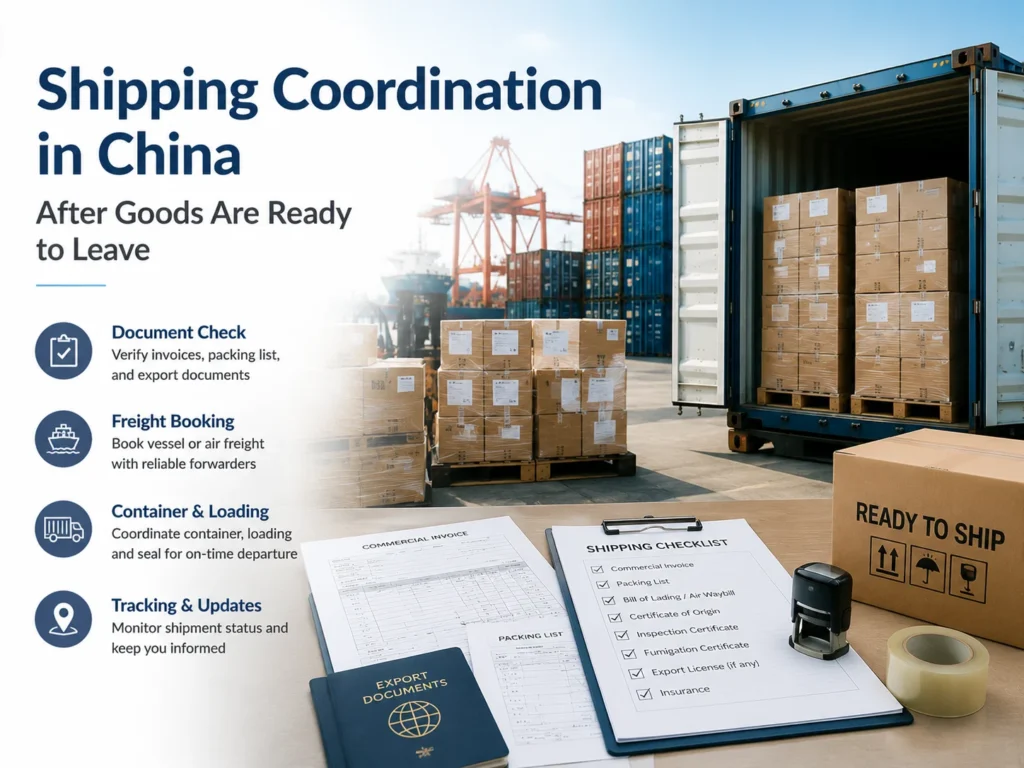
Shipping Coordination in China After Goods Are Ready to Leave
The last step is often less dramatic than sourcing, but it is where carton counts, packing lists, loading windows and document details can still create cost and delay. We coordinate supplier-side information and communicate with the buyer’s appointed freight forwarder so the handover is clearer.
Release and correction notes
Cartons, pallets, crates
Buyer-appointed transport
Not freight responsibility
Shipment Handover
Shipment coordination starts when goods, packing and release status are clear
After production follow-up and inspection, the buyer still needs a clean handover from supplier to freight forwarder. The packing list should match the order. Carton marks should match the buyer’s instruction. Wood packing, pallets, spare parts, labels and manuals should already be settled. If several suppliers are involved, consolidation timing and warehouse address need to be confirmed before trucks are arranged.
We help organize the supplier-side information. We do not replace the buyer’s freight forwarder, customs broker, carrier, marine insurer or final transport decision. The purpose is to reduce confusion between factory, buyer and forwarder while the goods are still in China.
- Release status. Confirm whether goods are released, need correction, require reinspection or wait for buyer approval.
- Packing list check. Compare model, quantity, carton count, gross weight, net weight, volume and marks against order records.
- Forwarder coordination. Share pickup address, factory contact, loading window, packing details and special handling notes.
- Document follow-up. Track commercial invoice, packing list, photos, certificate copies or supplier export documents requested by the buyer.
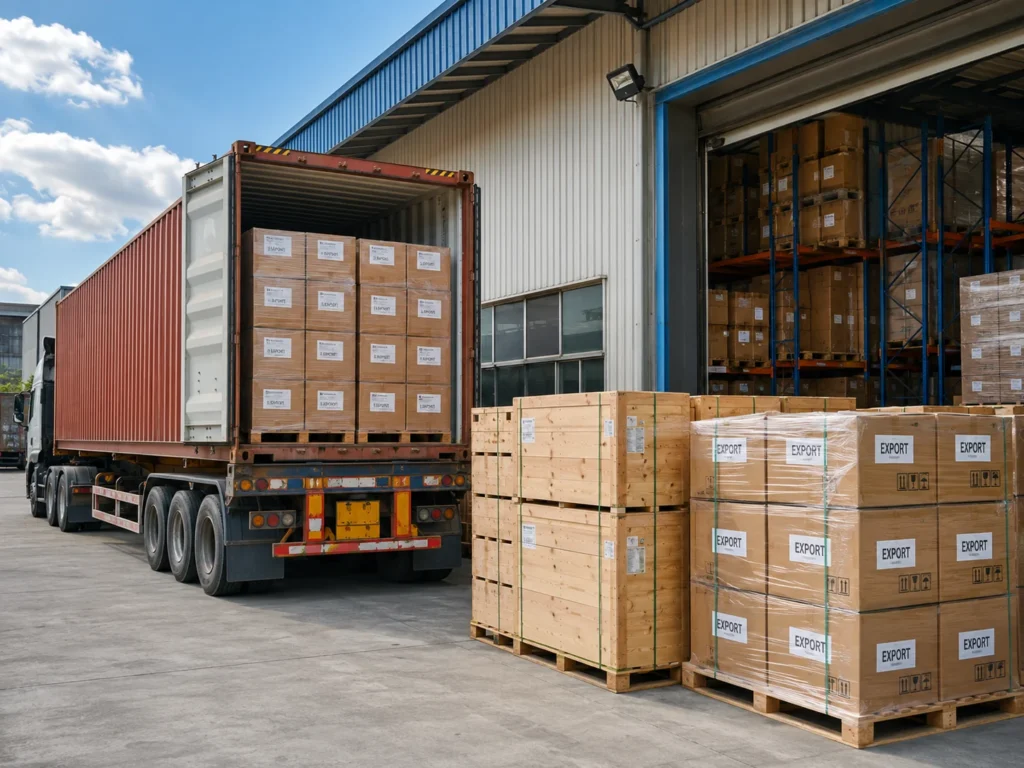
What We Coordinate
The small shipping details are often the ones that delay pickup
A forwarder cannot arrange smoothly if the supplier gives vague packing data or changes the ready date without telling the buyer. Before pickup, we check the details that connect factory release with transport booking.
Model, item description, quantity, carton count, gross weight, net weight, volume, pallet count, crate count and marks.
Pickup address, factory contact, loading date, truck access, forklift need, working hours and goods availability.
Multiple supplier pickup timing, warehouse address, carton identification, supplier labels and split shipment notes.
Pallets, wooden crates, fragile goods, moisture protection, machine fixing, carton strength and special warning marks.
Commercial invoice, packing list, certificate copies, photo records, HS code notes from supplier and forwarder document requests.
Shipment Steps
Each shipment step needs a different kind of confirmation
The supplier may say goods are ready, but readiness can mean finished goods on the floor, cartons sealed, pallets wrapped, crates completed or documents prepared. We separate those stages before the forwarder is asked to pick up.
Release decision
Confirm inspection result, supplier correction, buyer approval and whether any condition remains before shipment.
Packing confirmation
Check final carton, pallet, crate, accessory, spare part, label and carton mark records before pickup.
Packing list review
Compare carton count, quantity, weight, volume and model grouping with the order and inspection notes.
Forwarder contact
Share factory contact, pickup window, address, loading condition and supplier documents with the buyer’s forwarder.
Consolidation tracking
Follow whether goods from different suppliers reach the warehouse with the right marks and document references.
Loading record
Ask for photos or notes showing carton condition, pallet condition, crate marks or container loading when available.
Document check
Review supplier invoice, packing list and requested certificate copies before the buyer or forwarder uses them.
Open issue list
Record late correction, missing document, damaged carton, changed pickup time or quantity question for buyer decision.
Common Problems
Shipping trouble often starts with supplier-side data that looked harmless
A packing list may show the correct total quantity but the carton count may not match the warehouse photos. A supplier may finish goods but forget to add spare parts. A machine may be ready, but the wooden crate is not built. A forwarder may book a truck, then learn that the factory cannot load after 4 p.m.
These are not always major failures. They are coordination gaps. The earlier they are visible, the easier it is for the buyer, supplier and forwarder to adjust.
Points to clarify before pickup
- Packing list quantity differs from inspection notes
- Carton marks do not identify the buyer’s order
- Supplier changes loading time without telling the forwarder
- Wooden crate, pallet or spare parts are not ready
- Warehouse receives mixed goods without clear labels
- Commercial invoice description does not match buyer records
Product Notes
Different goods need different packing and loading attention
A carton of buttons, a pallet of faucets and a wooden crate for packaging machinery do not create the same shipping questions. We look at the practical handover details for each product type before the forwarder picks up.
Inner box, accessory bag, carton strength, pallet plan, carton marks, weight accuracy and mixed model separation.
Battery warning, key and screw bags, manual language, barcode, carton grouping and warehouse security for small high-value goods.
Wooden crate, machine fixing, spare parts box, voltage label, manual, test video record, gross weight and loading equipment.
Color grouping, small carton labels, moisture protection, crush risk, SKU count and consolidation marks.
Long parts, hardware bags, installation labels, package sequence, container planning and site-specific part identification.
Service Boundary
We coordinate shipment information, but we are not the freight forwarder
The freight forwarder handles transport booking, freight cost, carrier space, customs process, export declaration, bill of lading, insurance arrangement and destination-side movement according to the buyer’s instruction. Our work sits before and around that handover: supplier communication, packing data, release notes and missing document follow-up.
This boundary protects the buyer from confusion. If a forwarder says one thing and a supplier says another, we help collect the facts. The transport decision still belongs to the buyer and the appointed logistics provider.
- We can check supplier-side records. Packing lists, carton marks, photos, ready date and warehouse contact.
- We can support communication. Pickup timing, consolidation notes, document requests and correction reminders.
- We do not replace logistics contracts. Freight rates, vessel space, insurance and customs responsibility stay with the appointed parties.
- We keep buyer decisions visible. Release, hold, split shipment or wait for missing documents remains a buyer choice.

Send the shipment stage you need coordinated