Electrical Equipment Sourcing in China for Industrial Buyers
Industrial electrical equipment needs a different conversation from small electrical consumer goods. Drawings, cabinet layout, component brands, voltage, wiring labels, installation environment and test records can decide whether a supplier quote is usable.
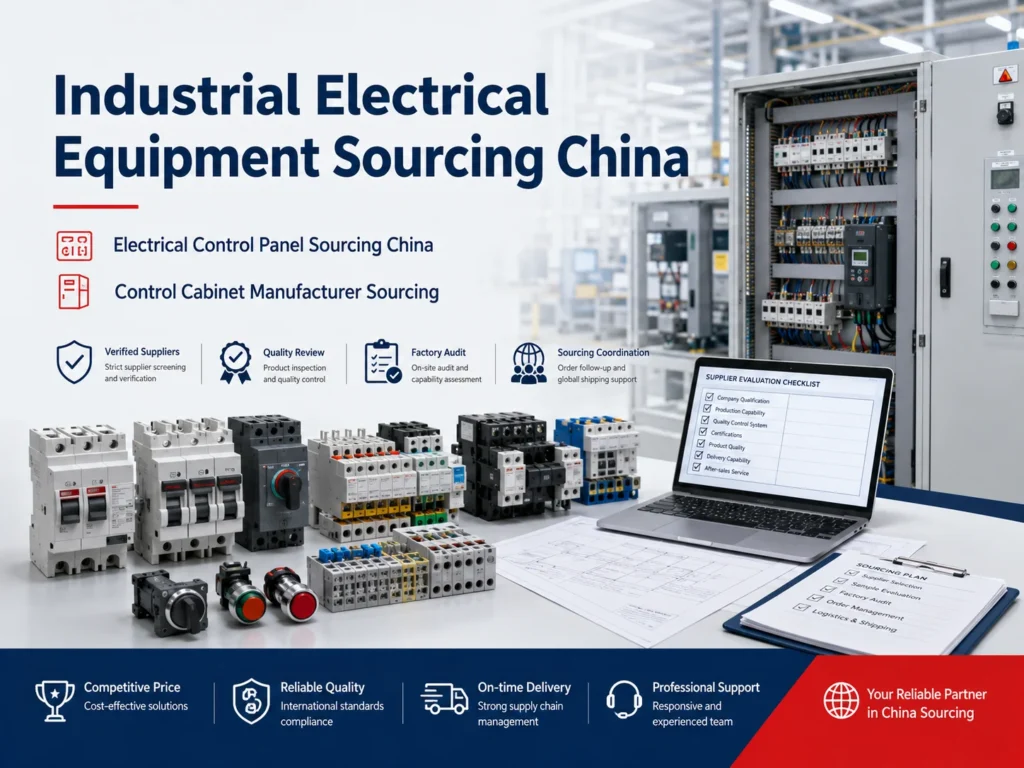
Drawings and parameters
Component source and assembly
Wiring, testing, records
Labels, crate, spare parts
Requirement Review
Industrial electrical equipment needs drawings and operating conditions
A buyer may ask for a control cabinet, panel, distribution box, motor control unit or industrial electrical assembly. A proper quote needs voltage, current, component brand expectation, enclosure rating, wiring standard, layout, installation environment and test requirement.
We help organize those technical points before supplier comparison. When deeper engineering judgement is needed, the buyer should involve an engineer or qualified specialist rather than relying on a sales quotation alone.
- Parameter file. Collect drawings, voltage, current, load, environment, component list and installation conditions.
- Supplier role. Check whether the supplier designs, assembles, wires, tests or only trades the equipment.
- Sample or prototype. Record wiring layout, component brands, labels, enclosure, test notes and revision points.
- Export preparation. Confirm spare parts, manual, wiring diagram, nameplate, crate packing and loading details.
Technical Checks
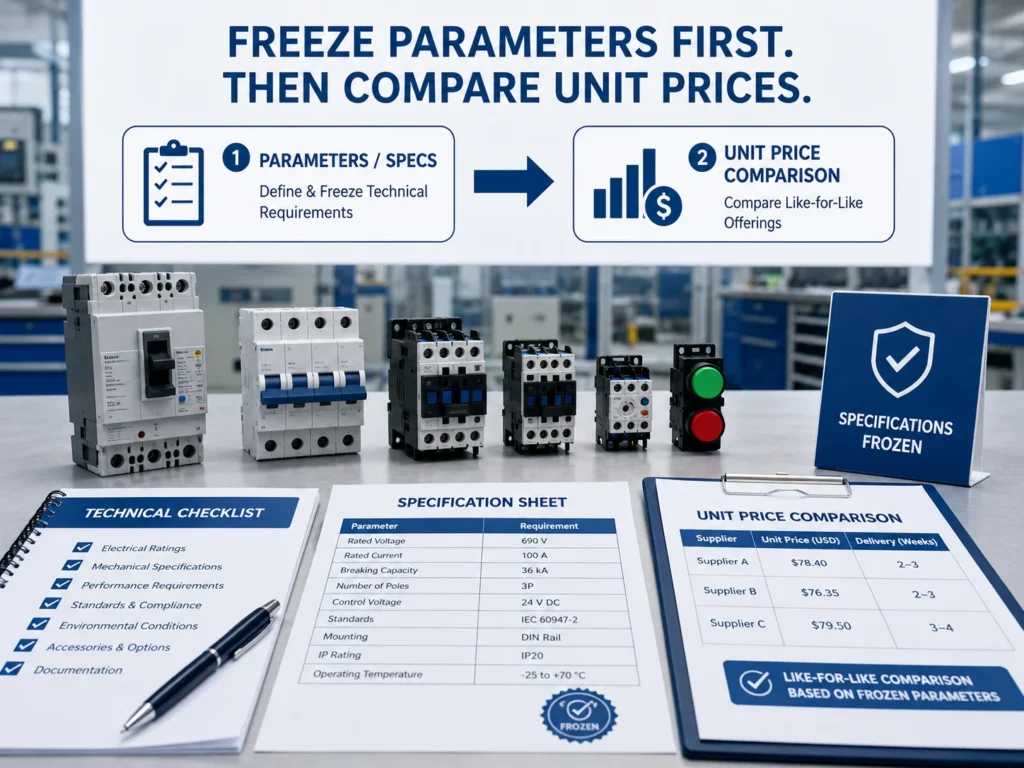
Quotations should state what is inside the equipment
Industrial equipment quotes can differ because one supplier uses specified component brands while another uses alternatives. One may include drawings, test records and spare parts, while another only quotes a basic assembly.
Operating Parameters
Voltage, phase, frequency, current, load, control method, protection requirement and installation environment.
Component List
Breaker, contactor, relay, PLC, inverter, sensor, terminal, enclosure and whether brand alternatives are allowed.
Drawings and Labels
Wiring diagram, cabinet layout, terminal marking, nameplate, warning label, operation label and language requirement.
Test Record
Factory test, power-on check, continuity check, component test, photo record and buyer acceptance points.
Export Packing
Wooden crate, moisture protection, spare parts box, manual, drawing copy, gross weight and loading marks.
Buyer Approval
Drawing revision, component substitutions and acceptance points should be approved by the buyer or a qualified specialist.
Electrical Category Split
Looking for small electrical products instead?
This service fits industrial equipment where drawings, component brands, wiring labels, operating parameters, factory test records and crate packing drive the sourcing work.
The inquiry is about plug type, voltage, cable, rating label, certificate model, manual language, retail packing or mixed SKU separation for smaller electrical products.
Supplier Fit
The supplier’s role should be clear before the buyer approves a design
Some suppliers build cabinets in-house. Some assemble from bought components. Some outsource wiring or testing. None of these roles is automatically wrong, but the buyer needs to know what is being controlled and what is being promised.
For custom equipment, the buyer should decide who approves drawings, who checks component substitutions and who accepts the test result. We help keep those decisions visible during supplier communication.
Ask again when
- Component brand is not listed in the quotation
- Drawing revision is not tied to a date
- Supplier cannot show wiring or test area
- Nameplate and labels are not approved
- Spare parts list is missing
- Crate packing is not planned before final week
Who Designs, Wires and Tests the Assembly
Industrial electrical equipment suppliers should show who designs, wires and tests the assembly
Electrical equipment sourcing is not only about a cabinet price. One company may fabricate the enclosure, another may buy branded components, wire the panel, write PLC logic, run a factory test or outsource part of the assembly. Those roles should be visible before drawings or component substitutions are approved.
For control cabinets, panels, distribution boxes and motor control units, the supplier’s practical strength should match the buyer’s drawings and operating environment. A company that assembles standard cabinets may not be suitable for a custom control system unless it can explain component selection, wiring, testing and revision control clearly.
Drawing Control
Cabinet layout, wiring diagram, terminal marking, nameplate, label language and revision date.
Component Source
Breaker, contactor, relay, PLC, inverter, sensor, terminal, enclosure and allowed brand alternatives.
Testing Record
Power-on check, continuity check, component test, factory test photos and buyer acceptance points.
Cabinet Quotation and Drawing Checklist
Voltage, phase, current, load, enclosure rating, component brands, drawings, spare parts, manual and crate packing should be stated in the quotation. If brand alternatives are allowed, the supplier should list which components may change and who approves substitutions. For custom assemblies, testing records, wiring photos, nameplates and drawing revisions should be checked through production follow-up before shipment.
FAQ
Questions buyers ask about electrical equipment sourcing in China
Can you source custom electrical equipment?
We can help with supplier search and communication when the buyer has drawings, parameters and acceptance points. Engineering approval should come from the buyer or a qualified specialist.
What is different from electrical product sourcing?
Electrical equipment usually involves industrial parameters, drawings, component brands, wiring, testing and installation conditions. Small electrical products focus more on plug, label, certificate model and retail packing.
Can you check component brands?
We can ask suppliers to list component brands and provide photos or documents. Final brand acceptance and substitutions should be approved by the buyer.
Can a factory test replace engineering approval?
No. A factory test can record what the supplier checked under agreed conditions. Engineering approval should come from the buyer or a qualified specialist when the equipment requires it.
What should be checked before shipment?
Nameplate, wiring labels, component list, spare parts, manual, drawing copy, visible assembly, crate packing and test records are common checks.
Send the equipment requirement