Wenzhou sourcing coordination with practical supplier follow-up
How We Handle a China Sourcing Project
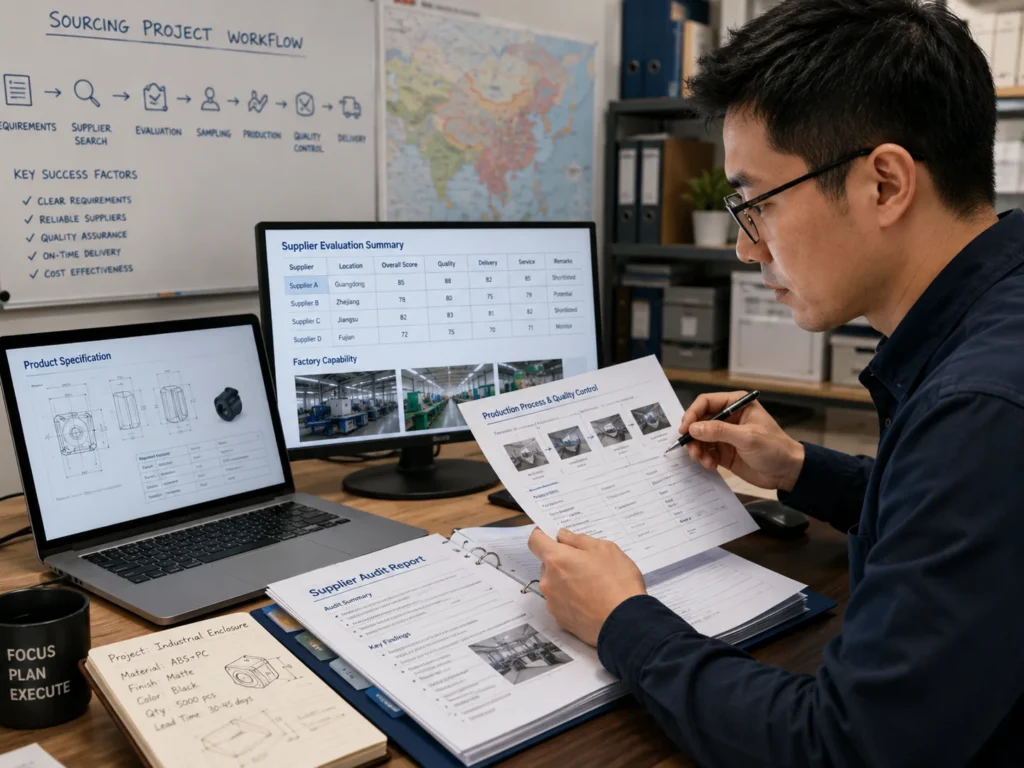
A sourcing project usually starts with incomplete information. We slow down at the points where mistakes often begin: unclear specifications, quick supplier claims, sample changes, packing details, production timing and inspection limits.
Requirement review
Supplier and sample records
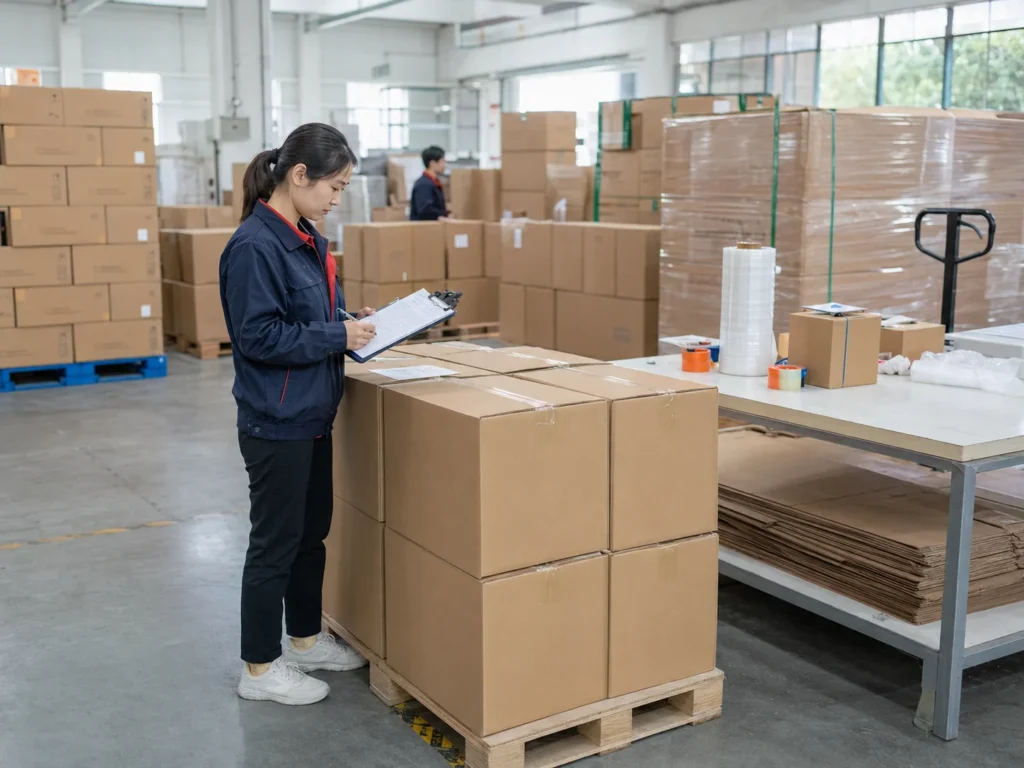
Inspection and packing checks
Final decisions stay with you
Quick Answer
We turn scattered supplier messages into a checkable sourcing record
A product photo and a target price are enough for the first email. They are rarely enough for a purchase order. One supplier may quote without naming the material grade. Another may leave out the plug type, carton strength or spare-parts list. A test video may show a clean run, but not with the buyer’s actual product.
We put those loose points into a working record. Supplier replies sit next to photos, quotation notes, sample comments and open questions. The buyer can then see which parts are confirmed, which parts are still only a supplier claim, and which decision should wait.
What This Process Is Good For
- Checking whether suppliers are quoting the same product, not just a similar product name.
- Keeping sample versions, buyer comments and supplier replies in one clear trail.
- Following production before final inspection, when there is still time to correct missing details.
Step by Step
The sourcing work moves through seven practical stages
The order can change by project. A repeat buyer may skip supplier search and ask only for sample control. A new product may need several rounds of quotation comparison before a sample is even ordered. We still use the same basic logic: clarify the product, check the supplier, record the sample, follow production and inspect what can be inspected.
Requirement review
We read the buyer’s photos, drawings, samples, links or old quotations. If the request says “smart lock,” we ask about door thickness, lock body, app system, fingerprint module, language, battery and backup key before sending suppliers a vague inquiry.
Supplier search
We look for suppliers whose normal product range fits the requirement. A fast reply is useful, but product match matters more. A supplier who makes similar-looking items may still be wrong if the material, size, testing or market requirement is different.
Supplier check
We review registration details, claimed product range, factory or trading company signs, certificate relevance, address information and visible risk points. This does not make a supplier risk-free, but it helps avoid relying only on a sales message.
Quotation reading
We compare the details behind the price: material, accessories, packaging, tooling, warranty, test requirements, sample cost, spare parts and delivery timing. Two suppliers may quote the same product name while leaving out different items.
Sample control
We record sample version, appearance, dimensions, buyer comments and supplier replies. If a supplier changes a logo method, color, cable, button finish or packing insert, the change should be visible before mass production starts.
Production follow-up
We follow order confirmation, material preparation, production start, mid-production update, packing confirmation and final inspection readiness. The goal is to find missing details before everything is packed.
Inspection and shipment release
We arrange or coordinate visible checks, photos, videos, quantity review, carton marks, packing details and shipment handover with the buyer’s appointed forwarder. Inspection scope is discussed before the goods are released.
Buyer approval
The buyer approves supplier choice, final price, payment terms, product requirement and shipment release. We prepare the records and questions; the commercial decision remains with the buyer.
Information We Ask For
A good project starts with what the buyer already knows
You do not need a perfect specification sheet to contact us. Send what you have. We will tell you what is missing and which questions should go to suppliers first.
Photos, drawings, links, sample photos, old quotations, previous supplier names or a short video showing how the product should work.
Destination country, retail or project use, voltage, safety concern, test requirement, packaging style and whether the product will carry a private label.
Target quantity, expected order rhythm, budget range, preferred Incoterms if known, and whether the buyer needs samples before choosing a supplier.
Rejected samples, weak cartons, wrong materials, delayed production, certificate mismatch, color difference or any issue from a past supplier.
Supplier Comparison
We read quotations as product records, not just price lists
A lower price is not automatically a problem. It may be a better factory, a better production setup or a supplier who already has the mold. But a lower price may also mean thinner material, different accessories, weaker packing, a missing test, a shorter warranty or a sample fee that was not shown in the first message.
- Same product name, different product. One faucet may use a different cartridge or plating thickness. One lock may use a different app system or lock body.
- Same sample, different bulk plan. A supplier may send a polished sample and later change a component for mass production unless the accepted version is recorded.
- Same carton count, different packing strength. Export cartons, inner boxes, pallets, labels and carton marks can affect damage risk and inspection result.
- Same delivery promise, different production reality. Lead time depends on material readiness, tooling, production queue, sample approval and packing confirmation.
Records and Limits
We record what was checked and what still needs caution
A supplier check does not prove everything about a company. A sample does not prove every unit in mass production will match. An inspection does not open every sealed product or test every hidden component. These limits should be clear before the buyer uses our notes to make an order decision.
For that reason, we separate visible facts from supplier claims. A business license can show registration details. A workshop photo can show visible equipment on the visit day. A sample record can show what the buyer approved. A test video can show one test condition. Each record is useful, but none of them should be treated as complete protection.
Typical records include
- Supplier comparison notes
- Quotation difference list
- Sample version photos
- Production milestone updates
- Inspection photos or video notes
- Packing and shipment handover notes
Project Handover
Before shipment release, we help the buyer review the open points
Labels, cartons, spare parts and packing lists should not wait until the goods are already at the door. We check these points against earlier production notes, then separate the shipment into simple groups: ready to release, needs supplier correction, needs buyer approval or needs outside review.
Ready to release
Inspection findings are acceptable, packing records match the order, carton marks are confirmed and the buyer’s forwarder has the needed shipment information.
Needs supplier correction
Visible defects, missing labels, wrong accessories, weak cartons or documentation gaps are sent back to the supplier for correction before release.
Needs buyer decision
Minor issues, partial shipment choices, schedule pressure, extra cost or replacement timing may need the buyer’s approval rather than a simple pass or fail.
Needs outside review
Laboratory testing, legal compliance, freight responsibility or engineering safety concerns should be handled by the right specialist before shipment.
FAQ
Questions buyers ask about the sourcing workflow
Can you start if I only have a product photo?
Yes, we can start with a photo, but we will ask for missing details before supplier comparison becomes serious. Size, material, target quantity, market and packing needs usually affect the first useful quotation.
Do you choose the supplier for me?
No. We compare suppliers, ask questions, collect records and point out visible risks. The buyer approves the final supplier, price, payment terms and order requirement.
Can you work with suppliers I already found?
Yes. We can review existing quotations, ask suppliers for missing details, check sample differences and compare their replies with other options if needed.
How do you handle sample changes?
We record the sample version, buyer comments, supplier replies and accepted changes. If the supplier later changes a component, color, logo method or packing detail, the record helps show what changed.
Does production follow-up replace inspection?
No. Production follow-up tracks progress and missing details before goods are finished. Inspection checks the goods that are ready. The two jobs support each other but are not the same.
If inspection finds a problem, what happens next?
The finding is written down with photos or short notes. Then we ask the supplier what can be corrected, what caused it and how long the correction may take. The buyer decides whether to rework, reinspect, accept a minor issue or hold the shipment.
Send the details on your desk