
Smart Lock Sample Control When the Panel Looked Correct but the Lock Body Needed Checking
A smart lock sample can look right from the front while the mortise, door thickness range, app system or accessory set does not match the buyer requirement. This scenario shows why front-panel approval is not enough.
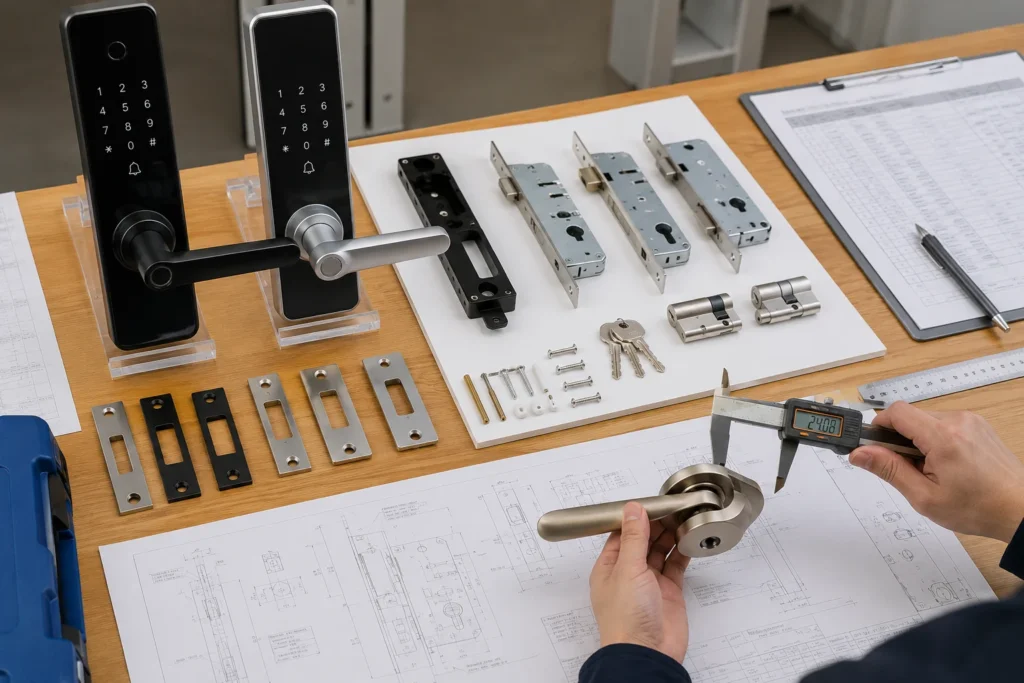
Why the Panel Photo Was Misleading
The front view looked correct before the lock body was checked
In this practical scenario, the buyer wanted a smart lock for apartment doors with a dark front panel, keypad, fingerprint access and app control. The supplier photo matched the desired appearance, but the first reply did not state the mortise, door thickness range, opening direction, language setting or accessory list.
The risk was simple: the panel could be right while the lock body was wrong for the door. A sample approved only by front photo might still fail at installation.
Mortise and Door Fit Check
The installation details had to be written before approval
The supplier was asked for the lock body drawing, door thickness range, opening direction, backset, cylinder, screws, strike plate and handle direction. For example, a 6068 mortise and a 35 to 55 mm door range would not be interchangeable with every local door style, even if the front panel looked similar.
This is where supplier verification can also matter: a certificate file or catalog model needs to match the quoted lock, not only the supplier’s product family.
App and Accessory Review
The lock was split into hardware, software and handover parts
The sample file separated the front panel, lock body, app platform, battery type, emergency power, keys, screws, strike plate, manual, label and packing. The supplier was asked for app screenshots or platform confirmation, because “smart lock” can mean different software ecosystems and after-sales responsibilities.
- Panel finish and handle direction were checked separately from the lock body.
- App platform and language were recorded before sample approval.
- Accessory bag, screws, keys and manual were treated as part of the sample.
Approval Status
The sample was not complete until the accessory set matched the door
Useful evidence included lock body drawings, accessory photos, app information, sample photos and packing notes. The buyer could approve the front panel appearance first, but final sample approval had to wait for mortise, app, manual and accessory confirmation. Sample management helped keep those approval layers visible.
The supplier updated the accessory list and sent clearer packing notes. One app setting still needed buyer approval before the sample could be treated as the reference version.
Remaining Limits
A complete sample file still cannot prove every future function
The sample record reduced avoidable risk, but it did not guarantee app support, firmware behavior, long-term battery performance or compliance in every destination market. Those questions may need buyer-side technical review, formal testing or clear after-sales agreement with the supplier.
Decision Point
The buyer delayed final approval until the lock fit was clear
The buyer did not approve the sample based only on panel appearance. The next decision was whether to order a revised sample, ask for a door-fit video or proceed with strict inspection references for function, labels, accessories and packing.
Related Reading
Smart lock approval checks after this scenario
Use these checks when a lock panel looks right but mortise, app, accessories or certificate model still need review.
Useful next steps
Send the door specification, mortise drawing, panel photo and app requirement for an initial compatibility review.