Faucet Quotation Comparison When the Lower Price Excluded the Same Parts
A faucet quote can look lower because the supplier is quoting a different cartridge, hose set, finish or carton. This scenario shows the checks used before treating two prices as comparable.
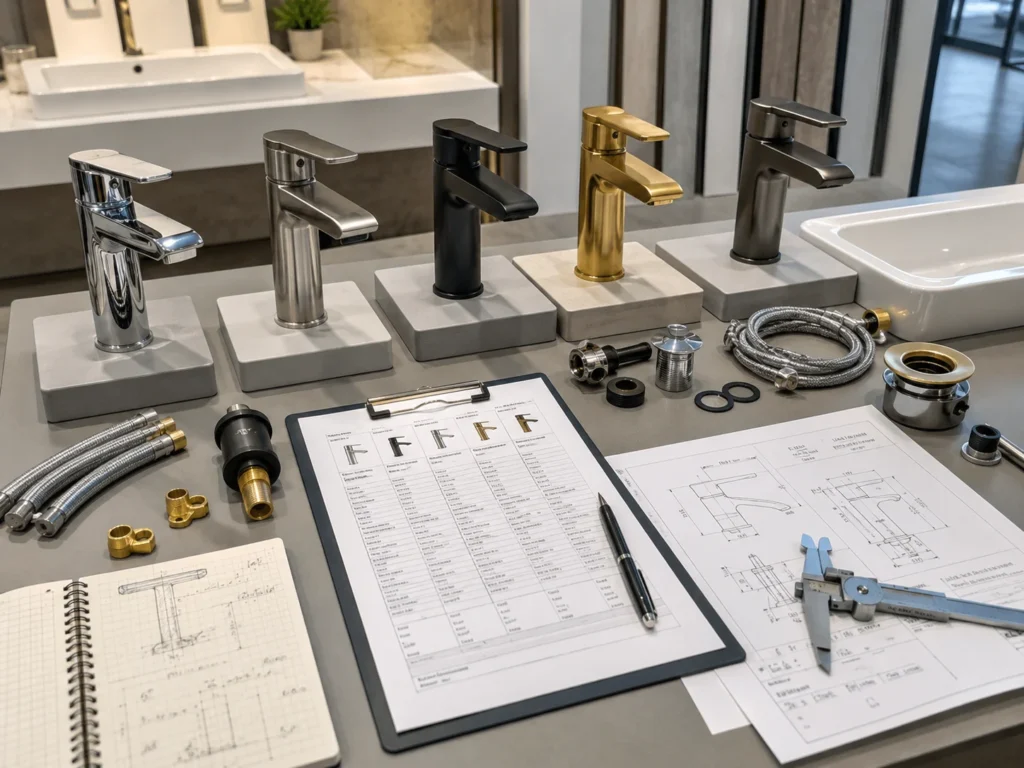
Original Quote Comparison
Two similar photos did not mean the same faucet
In this practical scenario, the buyer needed a single-handle basin faucet in chrome finish for an initial order of about 500 units. Two suppliers replied with similar catalog photos. One quote was about 12% lower, but it only named the model and finish. The second quote named more parts and looked higher before the missing details were checked.
The first comparison question was not “which price is cheaper?” It was whether both suppliers were quoting the same body material, cartridge, hose set, mounting kit, finish requirement and export carton.
Missing Components
The lower quote left out the price drivers
The missing fields were small on paper but important in production: body material, approximate body weight, 35 mm cartridge grade, 600 mm hose set, aerator, mounting kit, finish tolerance, logo position, inner box and reinforced export carton. The buyer also needed to know whether the supplier would run a leakage check before packing.
A faucet supplier can sometimes keep a low price by changing a cartridge brand, reducing body weight, using a lighter hose set or quoting a carton that is not suitable for export handling. Those changes are easy to miss if the buyer compares only photos and unit price.
Revised Quote
The price gap narrowed after the same parts were named
The lower supplier was asked to revise the quote around the requested component set. After the cartridge grade, hose set and carton strength were added, the gap moved from about 12% to a much smaller difference. The revised price was not automatically better, but it became easier to compare.
- Body material and finish were separated from accessory items.
- Cartridge and hose set were treated as price drivers, not small details.
- Packing strength, carton marks and leakage check scope were added before shipment planning.
Sample Decision
The buyer could decide what the sample needed to prove
The useful evidence was ordinary but specific: revised quotation lines, cartridge photo, hose set photo, accessory list, inner box photo, carton note and supplier explanation. The next sample request would not ask only for appearance. It would freeze the faucet body, finish, cartridge, hose set, mounting kit, logo position and packing reference.
This also gave the buyer a clearer inspection reference. A later quality inspection could check visible finish, accessories, carton marks and simple leakage scope against the agreed file, while sample management would keep the approved version from drifting.
Remaining Limits
The revised quote still did not prove bulk quality
The revised quotation helped the buyer compare two more similar offers. It did not prove finish consistency in mass production, cartridge durability, market compliance or long-term supplier capacity. Those points would still need sample review, inspection planning and, where required, independent testing.
Decision Point
The lower supplier stayed in review, but not on price alone
The buyer could keep the lower supplier in the shortlist only after the quote was corrected and the sample requirements were written down. The commercial decision still belonged to the buyer: accept the lower supplier with sample control, use the higher supplier for a clearer starting file, or ask both to submit a comparable sample.
Related Reading
Faucet quote checks after this scenario
Use these checks after two faucet prices look similar but the component list is still uneven.
Useful next steps
Send the two quotations, faucet photos and requested component list. We can identify which fields need to be aligned before sample approval.