Button Sourcing in China Where Small Details Decide the Order
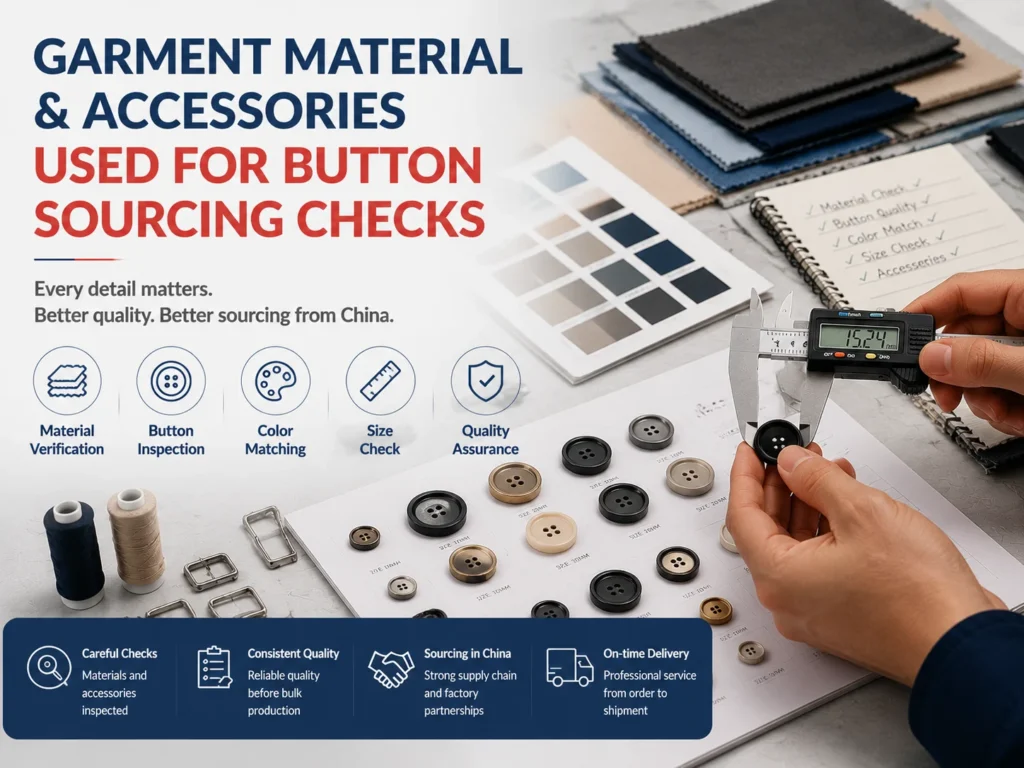
Buttons look simple until material, size, color, hole shape, edge finish, logo, dye lot, garment matching and packing are checked. We help buyers compare suppliers and sample versions before bulk production turns a small mismatch into a large problem.
Resin, metal, shell, wood
Size, holes, shank
Color, finish, logo
Color lot and packing mix
Garment Accessory Fit
A button should be checked against the garment, not only against a supplier sample board
A sample board can make every button look acceptable. The real question is whether the size, color, finish, weight and hole style match the buyer’s garment, brand look and sewing process. A button that seems fine by itself may look wrong on fabric or fail the buyer’s color tolerance.
We help buyers record the details that suppliers need before quoting and sampling. For bulk orders, we also keep attention on color lot, packing count, carton labels and mixed size risk.
- Reference match. Compare against garment fabric, old sample, brand requirement, size chart or design file.
- Supplier questions. Ask material, size, holes, shank, finish, logo method, color process and MOQ by color.
- Sample record. Keep sample card, color reference, approved finish, logo position and packing notes.
- Inspection points. Check size, color, surface, holes, logo, count per bag, mixed colors and carton labels before shipment.
Specification Checks
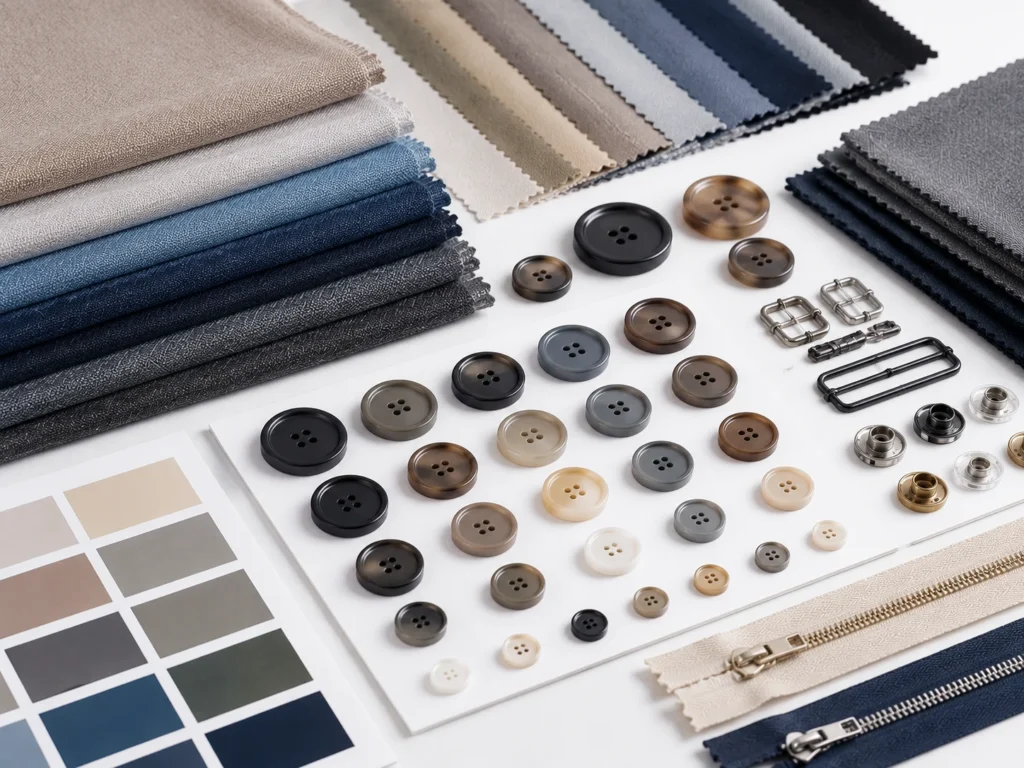
Supplier quotations should name the button details that affect cost
Button prices can move with material, color, logo, molding, polishing, plating, MOQ and packing. We ask suppliers to state those details before the buyer selects a factory.
Buttons are checked by garment use, not only by model number
A useful button record separates the garment reference, the approved sample card and the bulk packing rule. That makes it easier to catch a shade change, mixed size or short count before the goods leave China.
- Garment photo, fabric reference or old button sample
- Diameter, thickness, hole style, shank and edge shape
- Quantity split by color, size and garment order
What usually changes the unit price
- Material: resin, metal, shell, wood, horn effect or recycled option
- Logo: laser, engraving, embossing, printing or custom mold
- Finish: matte, glossy, pearl, plating, pattern or dye lot control
- Packing: bag count, spare quantity, labels and mixed SKU control
Color Lot
Approved card, fabric match and acceptable variation should be noted before the supplier dyes or plates bulk goods.
Bag Count
Quantity per bag, spare percentage and size label reduce problems when the garment factory starts sewing.
Logo Proof
Artwork, mold sample and visible logo position should be approved before the supplier treats the design as final.
Garment Factory Handoff
Button approval should survive the sewing line
A garment factory does not only need a nice button. It needs the right trim card, sewing direction, buttonhole fit, spare allowance, color split and bundle reference. A wrong bag count or mixed shade can interrupt production even when the button material is acceptable.
For garment accessory orders, we pay attention to the handoff notes that travel with bulk goods: size label, color name, PO reference, spare percentage, bag quantity and carton mark.
- Check buttonhole fit against garment thickness, not only the sample card.
- Separate color lots when the garment order has several shades.
- Confirm spare buttons and replacement bags before carton sealing.
- Keep size, color and garment PO visible on the outer carton.
Bulk Control
A button order can fail because of color lot or counting errors
Button defects are often small individually but expensive in production: shade differences, rough edges, blocked holes, weak plating, wrong logo, mixed sizes or short count in bags. These issues can slow garment production even when the button itself is low value.
We keep the accepted sample and bulk packing records connected. If the buyer needs strict color match, the fabric or approved card should be part of the supplier’s reference, not an afterthought.
Check before bulk order
- Approved color reference and tolerance
- Exact diameter, thickness and hole style
- Logo artwork and mold sample
- Bag count and spare quantity
- Mixed color and size control
- Carton label and garment order reference
Material, Finish and Mold Production Routes
Button suppliers can be material specialists, plating shops, mold makers or packing coordinators
Button sourcing is small in unit value but sensitive in production. A resin button supplier, metal button supplier, shell button supplier and wood button supplier do not control the same risks. Dyeing, polishing, plating, logo mold work and final packing may happen in different workshops. Color lot, logo detail, hole quality and bag count need their own checks.
- Resin or polyester: color lot, horn effect, pearl effect, polishing and edge finish.
- Metal: stamping, plating, coating, logo embossing, rust concern and surface protection.
- Shell, wood or natural effect: variation range, sorting method, thickness and visible defects.
- Logo and mold: artwork, mold charge, sample approval and whether logo detail survives bulk production.
A button quotation should state material, diameter, thickness, hole count, shank or flat back, color reference, finish, logo method, mold cost, MOQ by color, bag count, spare percentage, carton label and whether mixed colors or sizes are separated. Final packing and count checks can be linked to quality inspection before shipment.
FAQ
Questions buyers ask about button sourcing in China
Can you source buttons from a garment sample?
Yes. A garment sample is useful because it shows size, color, fabric match and sewing context. We still confirm material, finish, holes, logo and packing before order.
What affects button price most?
Material, size, color process, logo method, mold, finish, MOQ, packing and quantity by color can all affect price.
Can color be guaranteed exactly?
Color should be controlled by approved sample or color reference, but slight variation can still occur by material and dye lot. Strict tolerance should be discussed before production.
What should be inspected before shipment?
Size, holes, surface, logo, color grouping, bag count, mixed sizes, carton labels and visible defects are common checks.
Send the button reference